Romanian Boeuf Salad (Salată de Boeuf): Classic Recipe with a Modern Twist

Servings
.svg)
Prep Time

Cook Time

Ingredients

Total Time
Ingredients
Salad components
- 2 beef shanks with bone
- 3 carrots
- 1 parsnip
- 1 parsley root
- 1 small celery root
- 2 medium potatoes
- 1-2 liters water
- 1 bay leaf
- 6–8 peppercorns
- 3 pickled cucumbers, well-drained and finely chopped
- 3 slices pickled red pepper, finely diced
- 6 pitted olives, chopped
- 100 g peas, blanched for 2 minutes in salted boiling water and cooled
- 2 tbsp classic mustard
- Salt and pepper, to taste
Mayonnaise
- 2 hard-boiled yolks
- 100 ml milk
- 200 ml sunflower oil
- 1½ tsp mustard
- 2 tsp lemon juice
- ½ tsp salt
Equipment
Instructions
It's time to take another old recipe and adapt it to our modern needs and ways of cooking. This time I chose one of the most famous holiday starters in Romania - boeuf salad known as salata de boeuf in Romania.
I decided to stay as close as possible to the original version, even though today most households no longer prepare it the traditional way, replacing the beef with chicken or different types of ham.
However, I did make one essential change: I prepared a homemade mayonnaise adapted for the many people who no longer feel comfortable eating raw egg yolk. It's a very contemporary concern — and that is why this safer version makes sense today.
But if you prefer a classic homemade mayonnaise, you can find my personal favorite in the deviled eggs recipe on our website. As always, when working with old recipes, I try to preserve authenticity as much as possible and adapt only where modern life truly demands it.
I also apologize that I cannot credit the source of the original recipe. The cookbook I own is extremely old — likely from the interwar years or immediately after World War II — and the first part is missing entirely. All I can say is that the final result is delicious.
At the end of this article, I will also leave the original formula so you can try it exactly as it once was before exploring our updated version of salata de boeuf, now known worldwide as Romanian potato-vegetable-and-beef salad, or simply boeuf salad.
Instructions
The base:
- Place the beef shanks in a slow cooker with water, peppercorns, bay leaf, and salt.
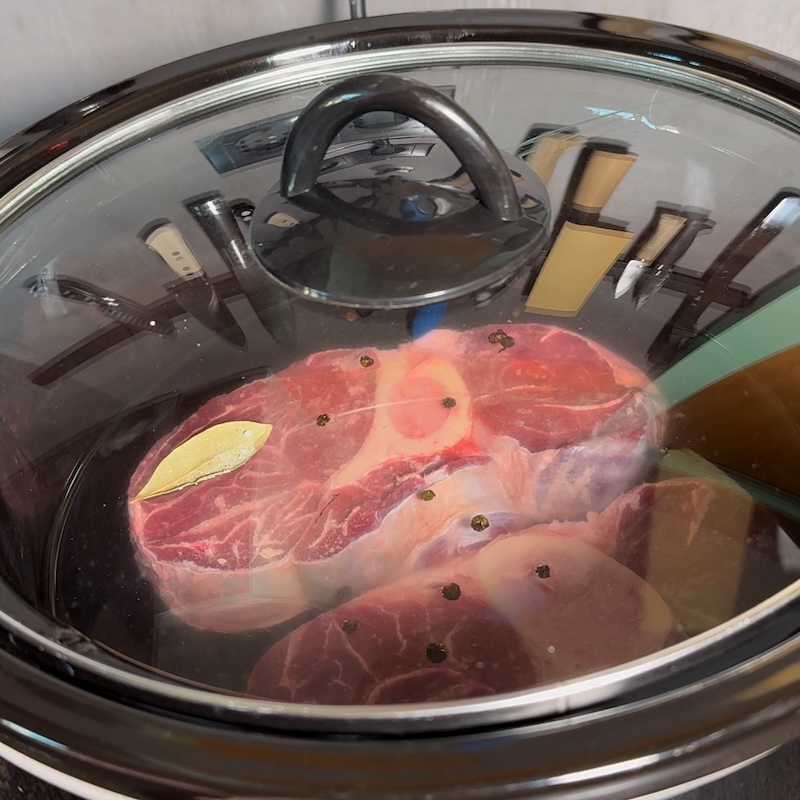
- Cook on high for 6 hours.
- After 3 hours, add the whole peeled vegetables
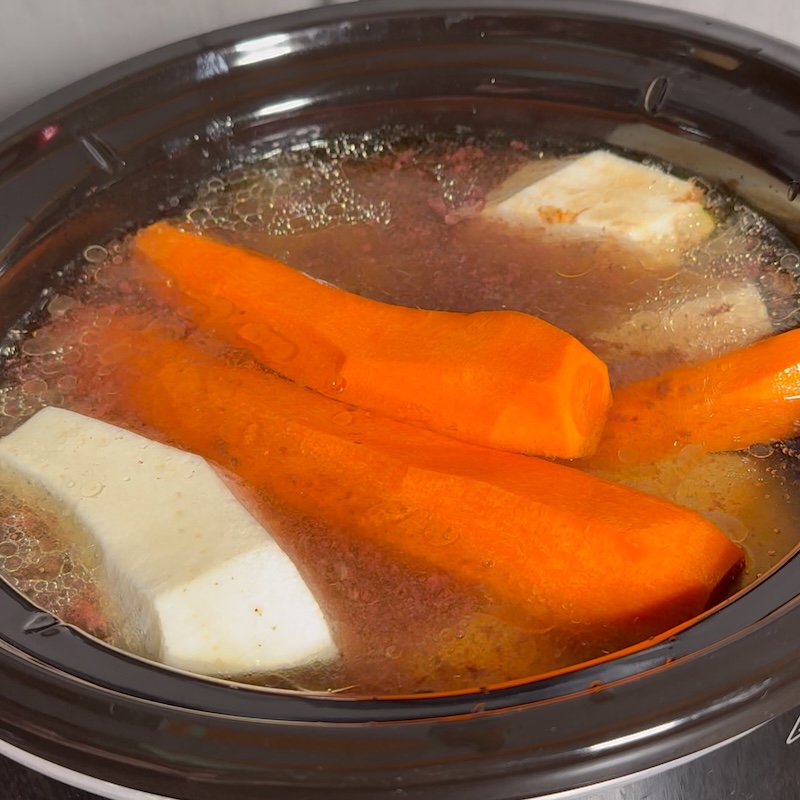
- Cook until the full 6 hours are completed.
- Remove the meat and vegetables and allow them to cool completely.
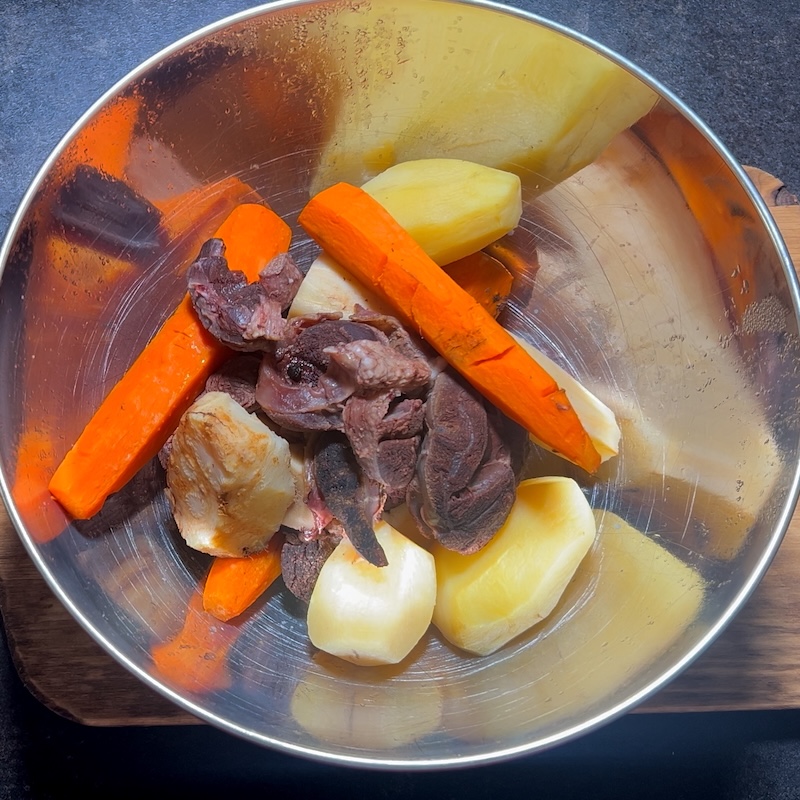
- Strain the broth — you will obtain a clear beef stock. So don't discard it. Freeze it and use it in other recipes.
If You're Not Using a Slow Cooker
Not everyone has a slow cooker at home, and the good news is that the boeuf salad can be prepared just as well in a regular pot on the stovetop. Traditionally, this is exactly how it was made. Place the beef, aromatics, and water into a large, heavy-bottomed pot. Bring to a gentle simmer, then reduce the heat to low.
Cook the meat for about 2–2½ hours, partially covered, skimming any foam that forms. After the first hour, add the peeled vegetables and simmer until both the beef and vegetables are tender but still hold their shape. Once done, remove everything, allow it to cool, and strain the broth.
This method stays very close to the historical preparation found in early Romanian cookbooks, producing a result that is slightly firmer than the slow-cooker version but just as flavorful and perfectly suited for boeuf salad.
Combining ingredients
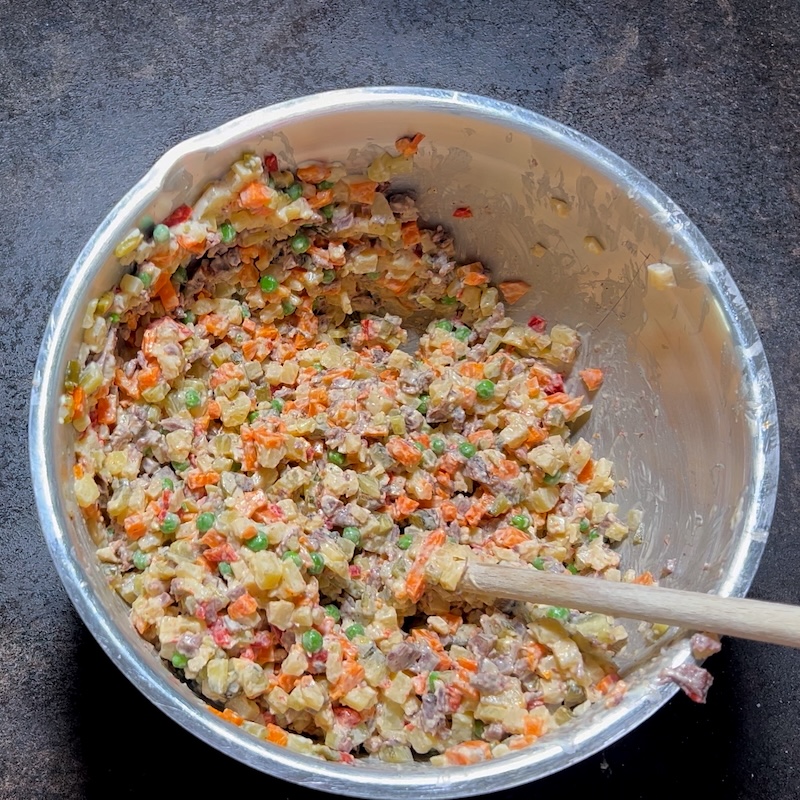
- Cut the cooled meat, the vegetables, the pickles, and the olives into small, uniform cubes.
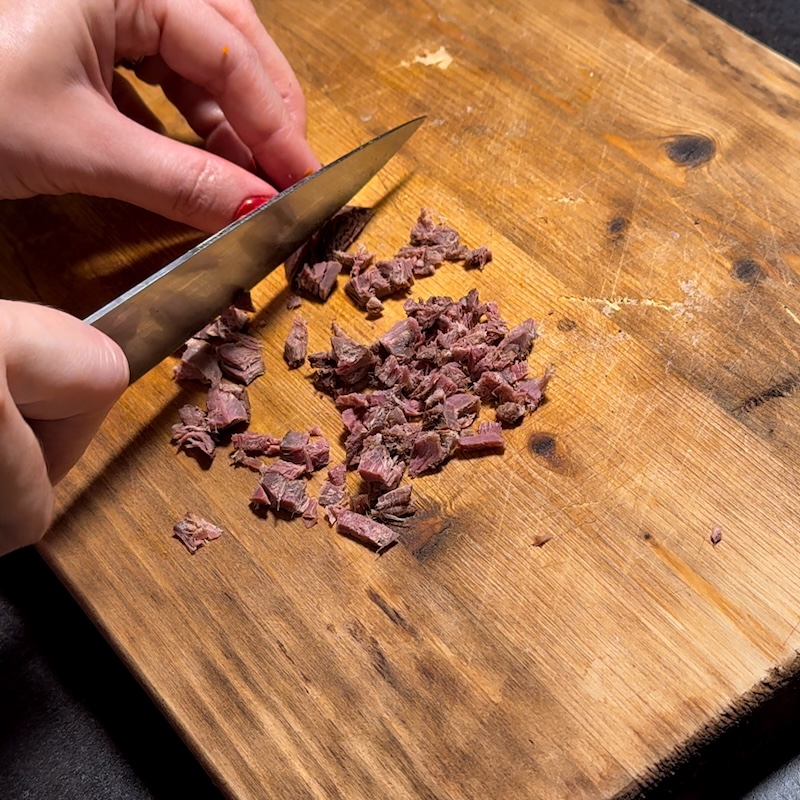
- Place in a large bowl and add blanched peas.
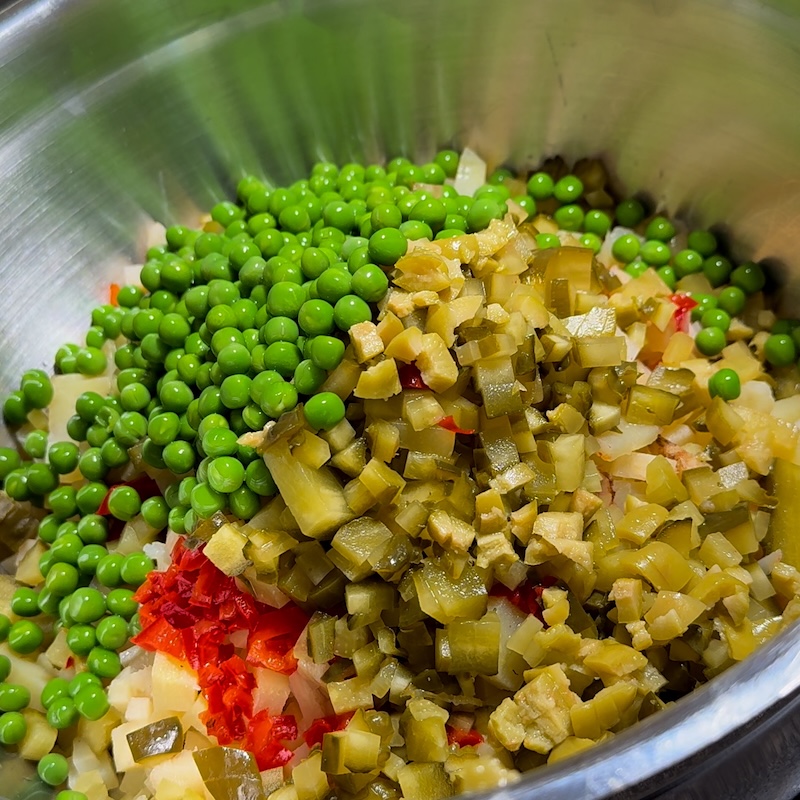
- Set aside and let's make a modern mayo.
Mayonnaise
- In a big measuring cup, add cooked yolks, milk, mustard, salt, and lemon juice.
- Using an immersion blender, blend for 5–10 seconds, then drizzle in the oil slowly, mixing continuously until thick and creamy.
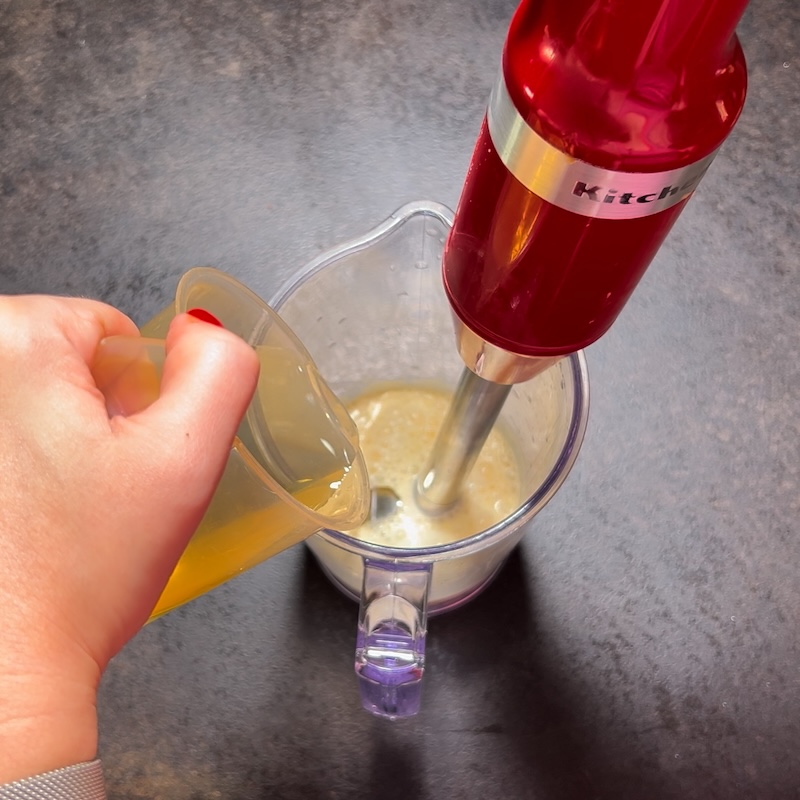
- Reserve 2–3 tbsp for glazing.
Assembly
- Gradually fold about ¾ of the mayonnaise and the mustard into the salad mixture using a spatula.
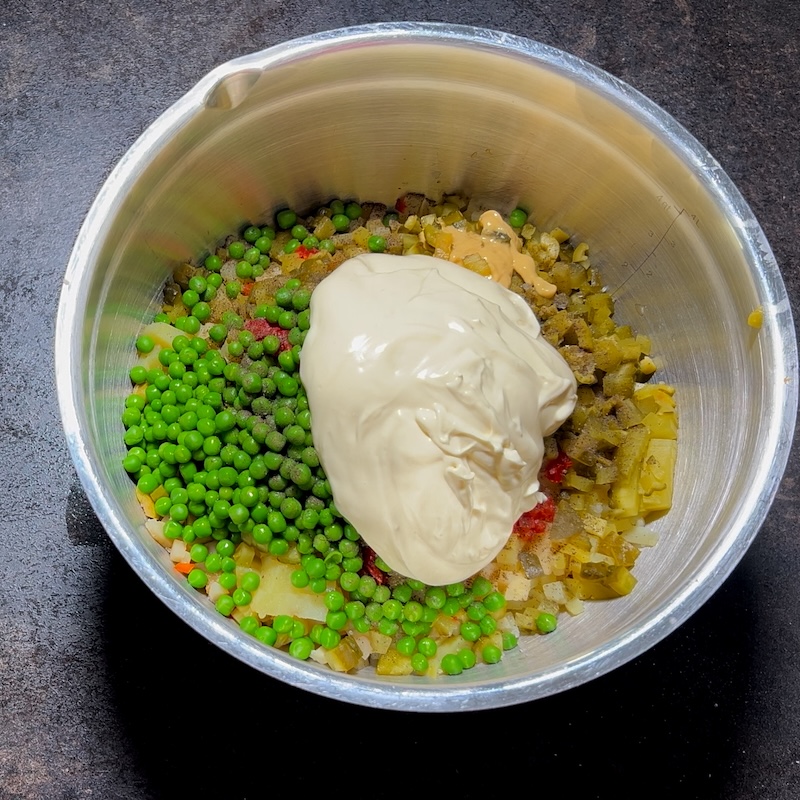
- Give it a taste and add more seasoning, mayo, and mustard if needed.
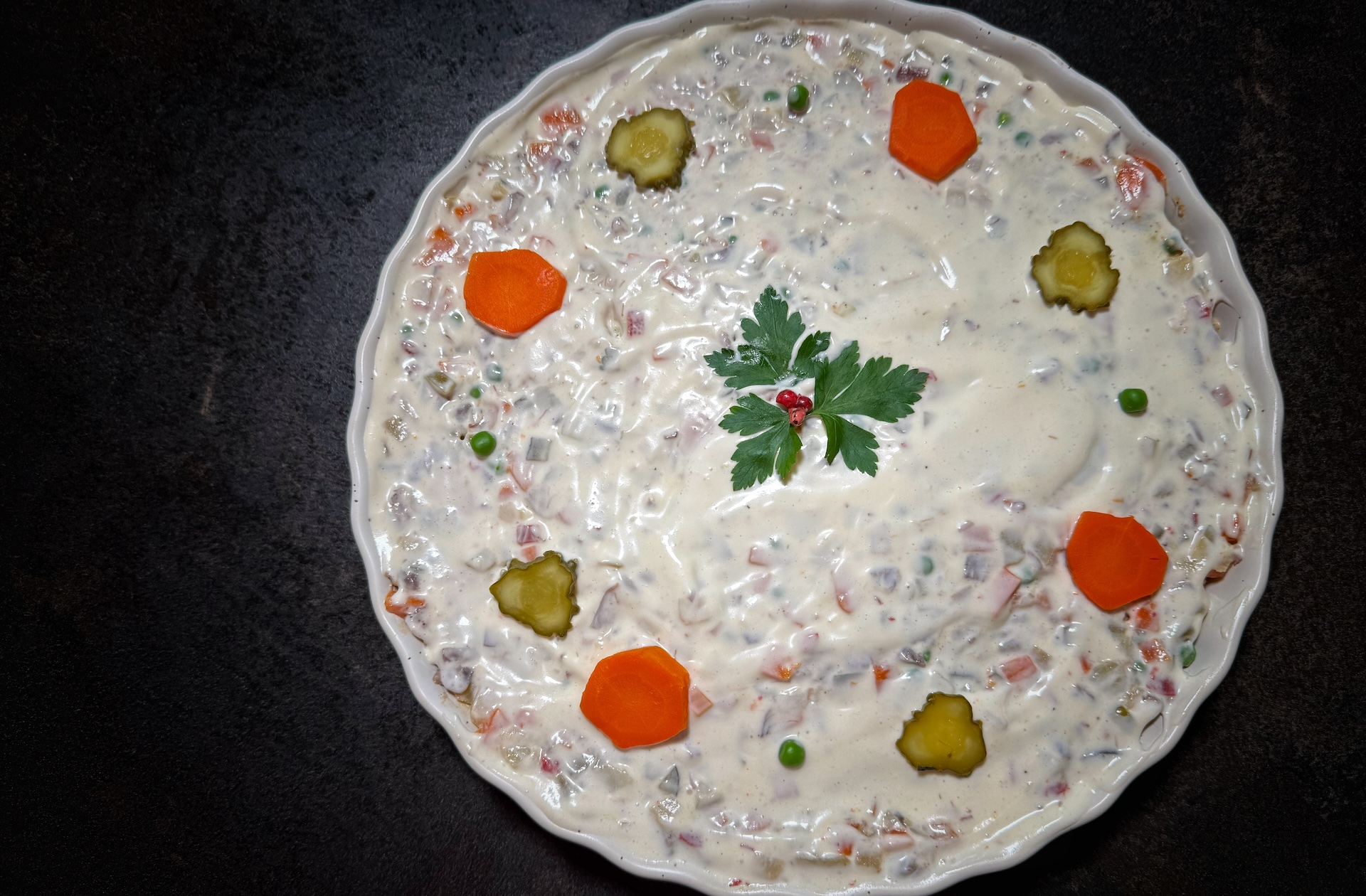
- Transfer the salad to a serving dish and smooth the surface with a damp spatula.
- Spread the reserved mayonnaise on top in a thin, glossy layer.
- Refrigerate 1–2 hours before serving.
Modern Festive Decoration
- Thin slices of pickled gogoșar
- Small peas
- Parsley leaves or microgreens
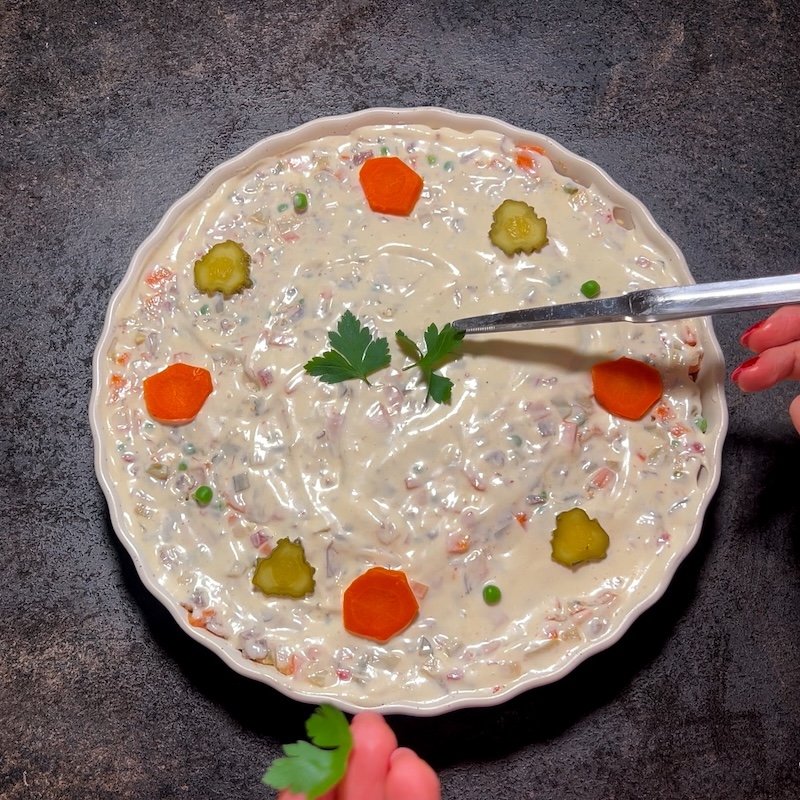
- Optional: a few drops of olive oil for shine
The Original Salată de Boeuf
I will leave the original recipe here so you can try it exactly as written before comparing it with our updated version:
2 carrots, 1–2 parsnips, 1–2 parsley roots, 1 celery root, 3–4 potatoes, 1/4 kg beef, 1 small can of fine peas, 3 pickled cucumbers, 2 pickled red peppers (gogoșari), 4 eggs, 200–300 g oil, 10–12 olives, 1 lemon or vinegar, mustard, salt.
You can use the leftover vegetables and meat from a meat soup or vegetable broth.
Cut all the vegetables, potatoes, pickles, and boiled meat into small cubes, along with 5–6 olives with the pits removed.
Add a few olives and mayonnaise, keeping a portion aside for glazing the top.
Shape the salad as desired, cover with the remaining mayonnaise, and decorate with red pepper, carrot, olives, and peas. Keep refrigerated.
Understanding the Differences Between the Two Versions
Modernizing a traditional dish such as salata de boeuf, now recognized internationally as Romanian beef salad or simply boeuf salad, requires a delicate balance between preserving heritage and understanding contemporary needs.
The original recipe reflects a time when families regularly simmered weekday soups from beef bones and seasonal vegetables. Using "vegetables and meat leftovers" was both practical and economical — nothing went to waste, and festive dishes were often assembled from leftover broth ingredients.
In today's kitchens, slow cookers are a valuable ally, allowing beef shanks to cook gently while extracting deeper flavor with minimal supervision. This change aligns with modern lifestyles without compromising the essence of the dish.
Still, the stovetop alternative remains closer to the original cooking method for those who appreciate historical accuracy.
However, one of the most significant modern adjustments I made is the mayonnaise. The heritage version uses raw egg yolks emulsified with oil, mustard, and lemon.
While delicious, many people today avoid raw eggs due to pregnancy, food safety concerns, or simple preference.
My updated mayonnaise keeps the luscious texture and tang but eliminates the risks, making the boeuf salad recipe more accessible to contemporary households.
Vegetably, the modern version enhances freshness: blanching peas instead of using canned ones, balancing pickles more intentionally, and maintaining precise knife cuts for a refined texture. Nutritionally, this results in a dish that is still rich — salată de boeuf will always be indulgent — but slightly lighter and cleaner-tasting than mid-20th-century versions.
Finally, using beef rather than chicken preserves the historical flavor profile and honors the boeuf salad origin, which traces its roots back to Russia's Olivier Salad.
Yet the method and ingredients have been tailored to today's rhythm of cooking, resulting in a dish that bridges past and present with respect and intention.
A Brief History of Salată de Boeuf
Though today one of Romania's most beloved holiday dishes, boeuf salad began its story in 19th-century Moscow. Chef Lucien Olivier created the legendary Olivier Salad, a luxurious mixture of game meats, pickles, aspic, and a secret mayonnaise.
Romanian cooks discovered and adapted the recipe soon after. By the late 1800s and early 1900s, versions of the boeuf salad appeared in cookbooks from the Old Kingdom and Transylvania. Over time, ingredients were simplified to reflect what was available locally — boiled vegetables, leftover beef from soups, homemade pickles, and eggs.
By the interwar period, it had already become a staple of festive meals. After World War II, its iconic status only strengthened. Today, it remains one of the undisputed symbols of Romanian winter holidays.
FAQ
Before preparing this festive dish, here are some of the most common questions home cooks ask:
Q: Can I use chicken instead of beef?
A: Yes. Chicken is the most common modern substitute, though beef offers the most authentic flavor.
Q: Can I prepare boeuf salad the day before?
A: Definitely — it tastes even better the next day after the flavors have blended.
Q: How finely should everything be diced?
A: Very finely. Uniform cubes help create the signature texture of true boeuf salad.
Q: What type of pickles should I use?
A: If possible, always choose brined cucumbers, not sweet pickles. Pickled red peppers add color and brightness.
Q: Why does my mayonnaise turn out too thin?
A: Most often, the oil was added too quickly. Pour slowly and blend continuously.
Conclusion
This dish is more than a holiday appetizer — it is a culinary bridge between Romania's past and present.
I hope this modernized version inspires you to rediscover the heritage of salata de boeuf, while still enjoying a recipe adapted to today's way of living.
The full video for this recipe is available below and on our YouTube channel — so don't forget to like and subscribe for more delicious stories, festive ideas, and modern interpretations of beloved classics.