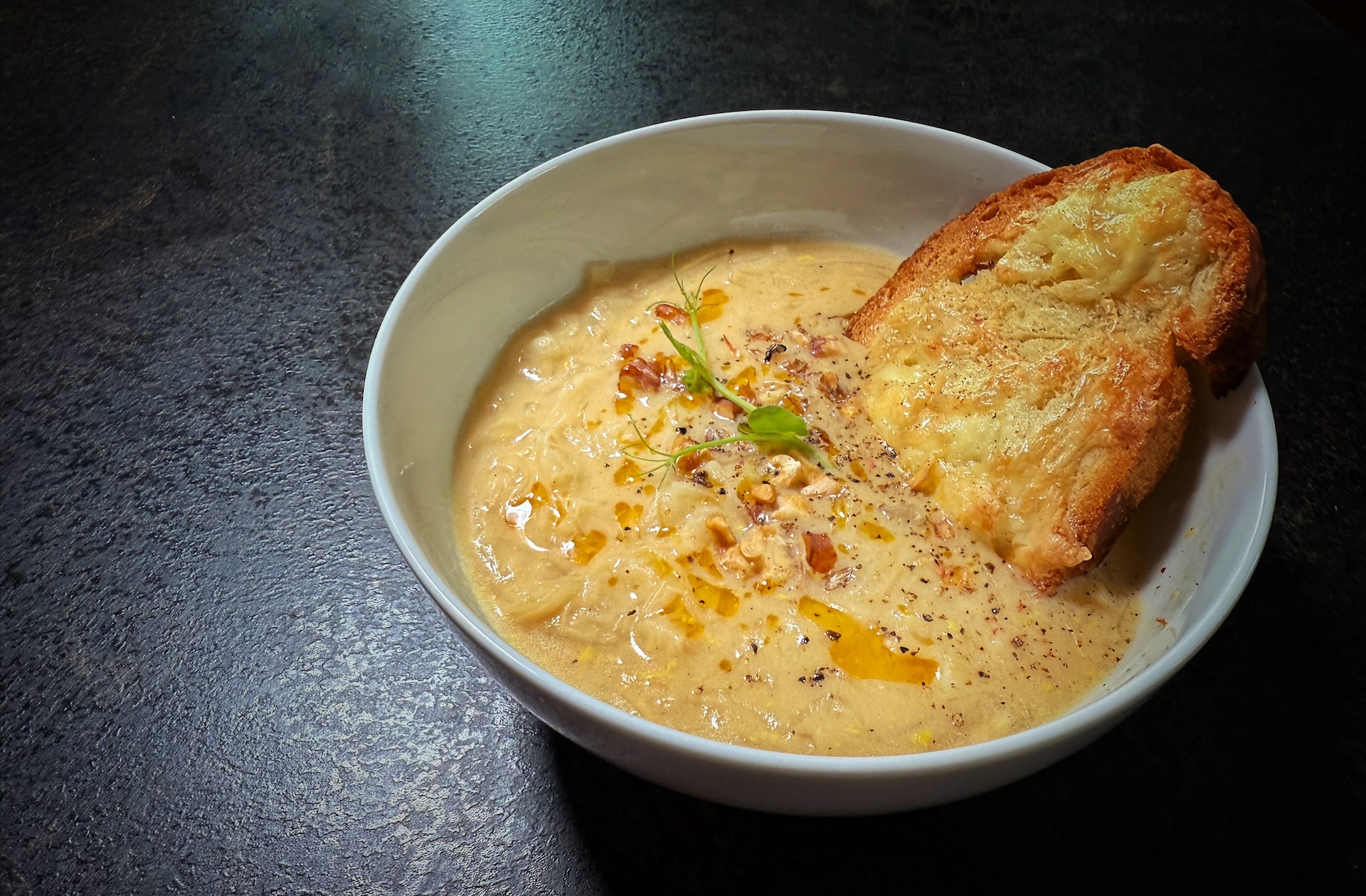
Madame Mado’s Champagne Onion Soup
A rich French onion soup with Champagne and Camembert, adapted from a 1927 Parisian recipe.

Servings
.svg)
Prep Time

Cook Time

Ingredients

Total Time
Ingredients
The soup
- 700 g yellow onions, sliced very thinly on a mandoline
- 40 g butter
- 250 ml brut Champagne
- 1 level tablespoon flour
- 700 ml hot beef stock
- ½ bay leaf
- A pinch of cayenne
- A pinch of cinnamon
- Salt and freshly ground black pepper
Cheese in the soup
- 50–60 g Camembert, rind removed
Liaison
- 2 egg yolks
- 60 ml Port wine
- 1 tbsp Cognac
Final touches
- 20–25 g walnuts, roughly chopped
- Finely chopped chives
The bread
- 4 thick slices rustic bread
- 20–25 g soft butter
- 100–120 g very creamy Camembert
- Black pepper
Equipment
Instructions
It’s time to take another old recipe and adapt it to our modern needs and cooking methods. This time, I chose one of the most beloved French recipes. I am talking about the French onion soup.
However, instead of the version we all know and love, generously topped with Gruyère and baked in the oven, I went in a slightly different direction.
The inspiration comes from a 1927 book called Nouveaux Régimes, written by Paul Reboux. This lesser-known interpretation replaces stock and Gruyère with Champagne and Camembert, creating a soup that feels indulgent, intimate, and surprisingly refined.
As always, my goal was to modernize the recipe without stripping it of its authenticity.
Let’s see how this 1920s idea translates into a contemporary French onion soup recipe you can realistically cook at home.
Method
- The onions: Finely slice the onions using a mandoline.
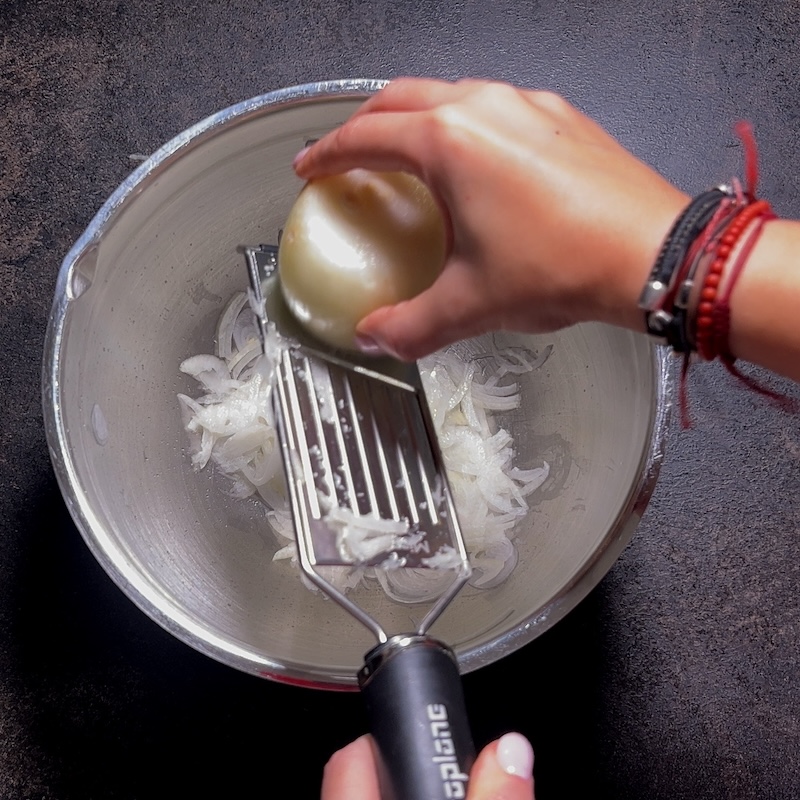
- Melt the butter in a wide pot. Add the onions and cook over low heat for 35–40 minutes, stirring occasionally.
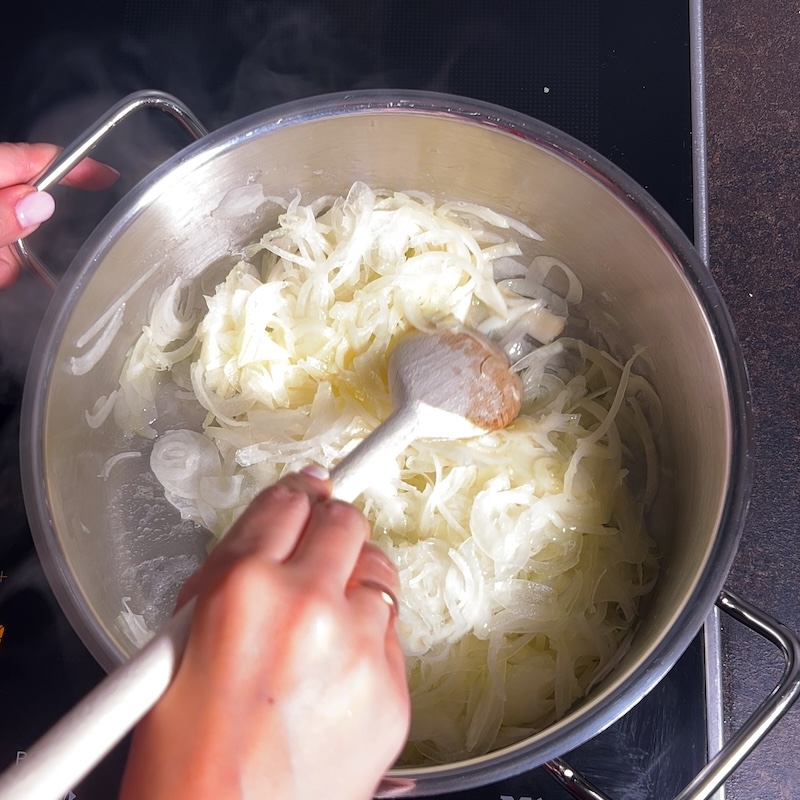
- Cook until deeply golden, soft, and sweet.
- Deglazing: Increase the heat slightly. Deglaze with the Champagne, scraping the bottom of the pot well. Let it simmer gently for 1–2 minutes.
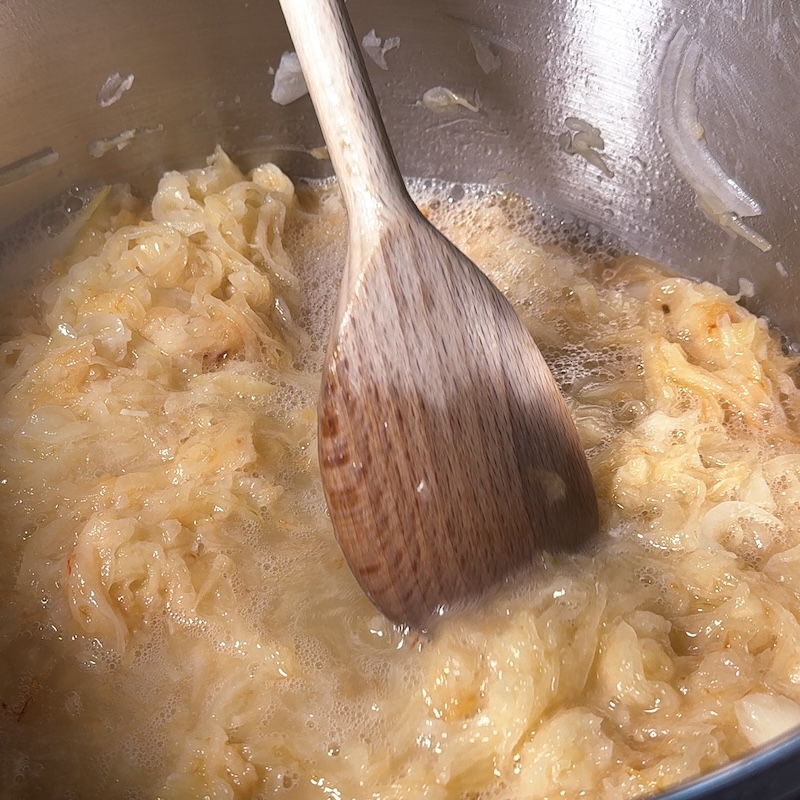
- Thickening: Sprinkle the flour over the onions.
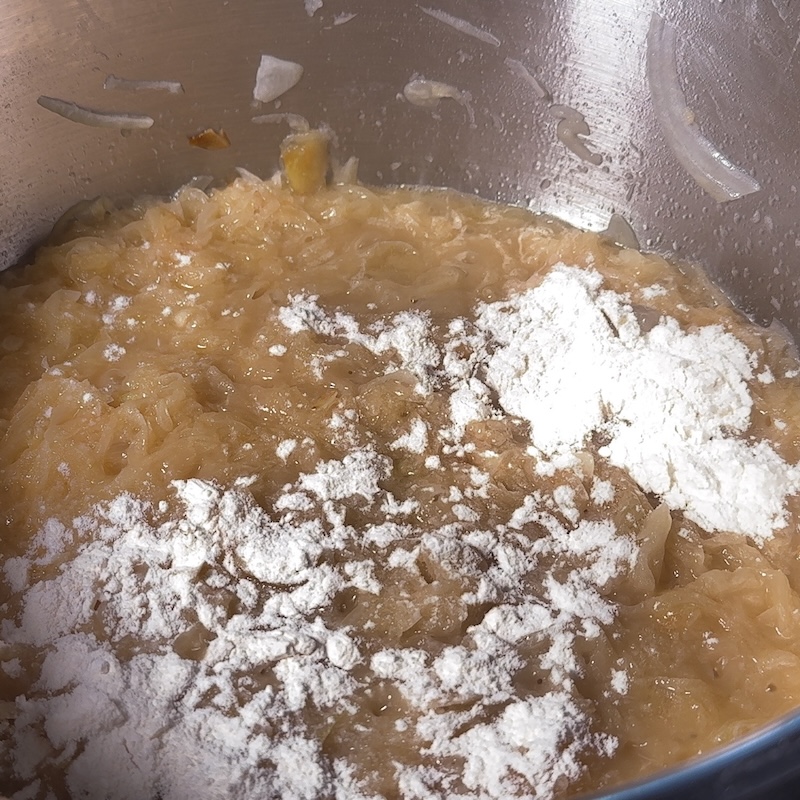
- Mix well, and cook for 30–40 seconds until the raw flour taste disappears.
- The soup base: Gradually pour in the hot beef stock, stirring constantly. Add the bay leaf, cayenne, and cinnamon. Simmer very gently for 10–12 minutes, then remove the bay leaf.
- Camembert in the soup: Lower the heat to minimum. Add the Camembert in small pieces.
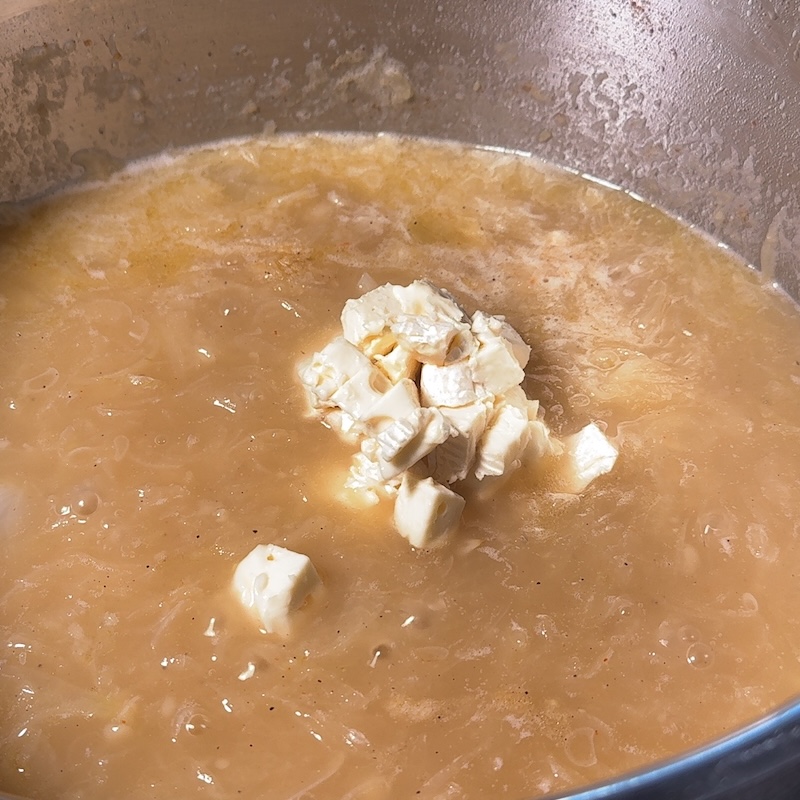
- Stirring until fully melted.
- Liaison & gentle simmer: Mix the egg yolks with the Port and cognac. Temper with one ladle of hot soup.
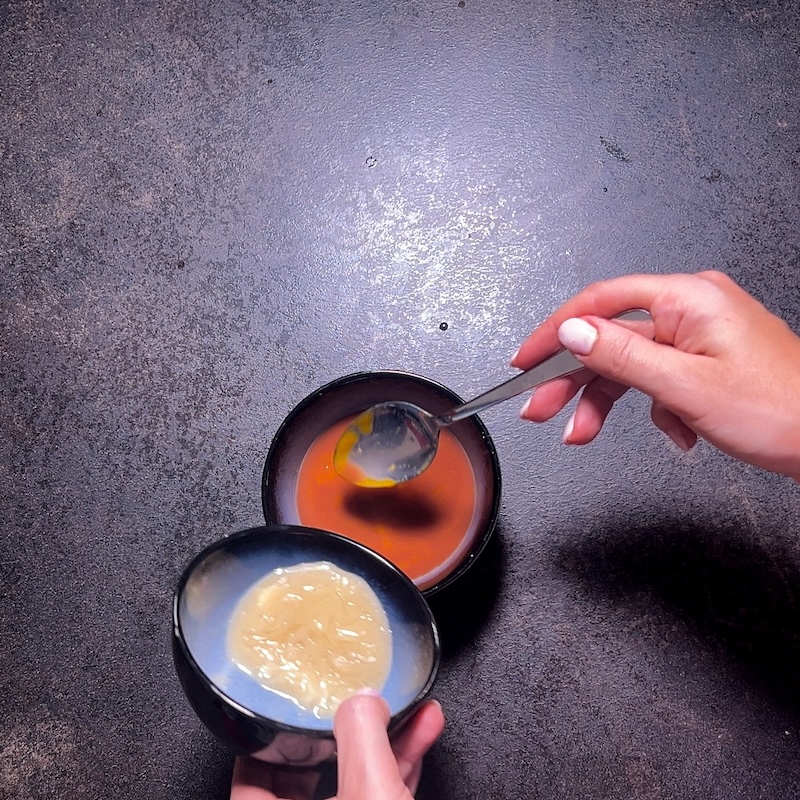
- Then incorporate back into the pot.
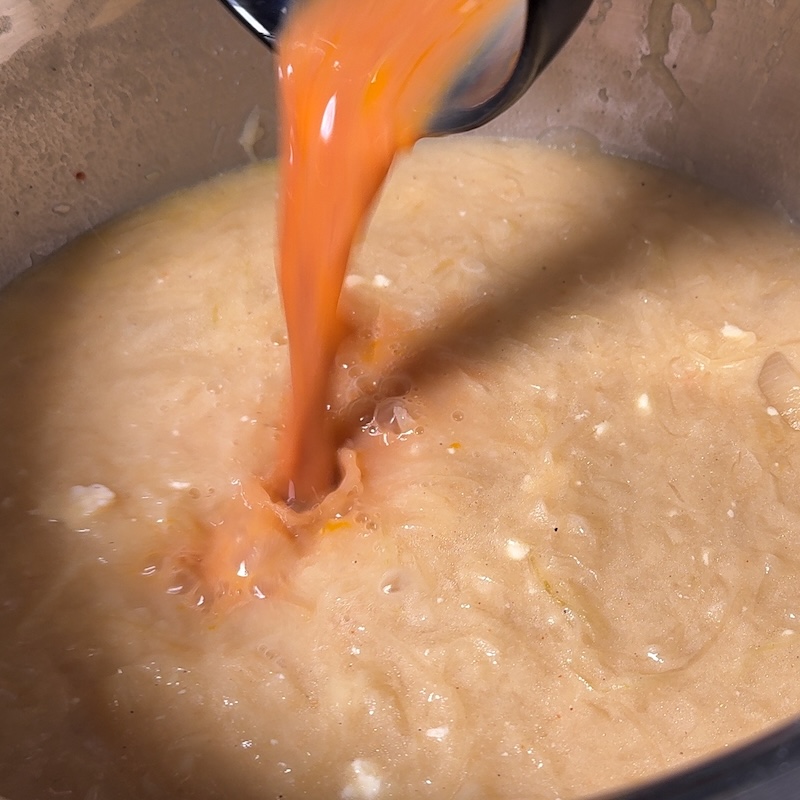
- Let the soup simmer very gently for 2–3 minutes over low heat, stirring constantly.
- Do not let it boil aggressively.
- Finishing the soup: Add a bit more water and adjust the seasoning if needed; otherwise, the soup is ready.
- The bread: Spread the bread slices with butter, add generous Camembert.
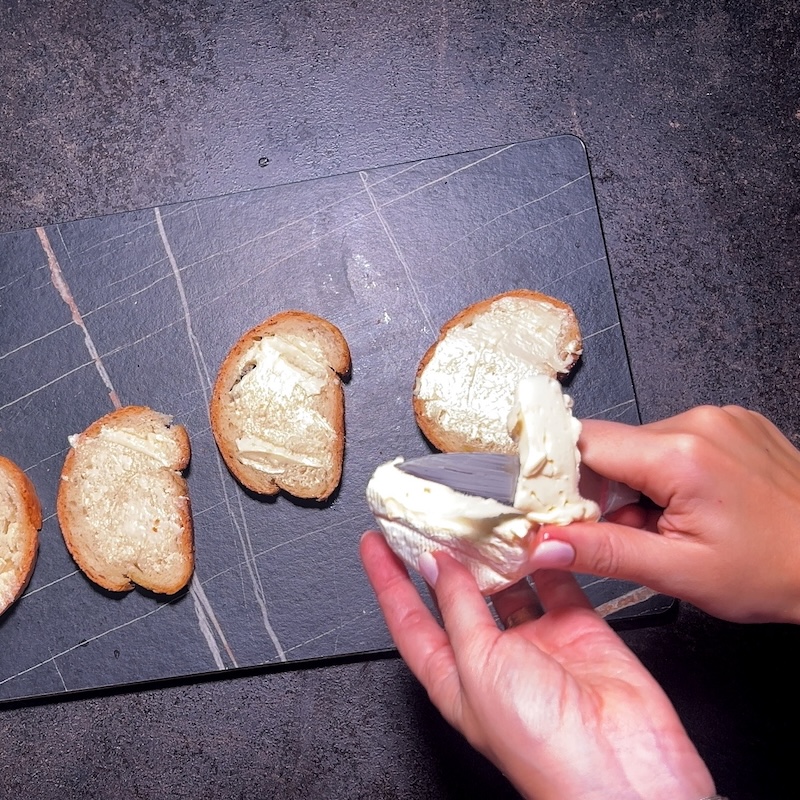
- Bake at 180°C for about 8 minutes, until golden at the edges and melted.
- To serve: Ladle the hot soup into bowls, sprinkle with chopped walnuts, and place one slice of bread half-submerged for maximum texture contrast.
- Add a bit of green herbs such as microplants or chives, a bit of olive oil, and serve.
Original 1927 Version – Worth Trying As It Is
I’ll also leave the original recipe here, exactly as written, so you can try it before making our adapted version:
Before you try the adapted version, please check out the original recipe because the story is beautiful. It is chaotic, indulgent, and wonderfully honest.
“From time to time,” Gaston Derys told me, “I used to dine, years ago, at friends’ homes who lived in a large and comfortable apartment, but located in a rather distant neighborhood.
Exquisite dinners, pleasant conversations, beautiful women.
Time passed so quickly that one o’clock in the morning would arrive before we even noticed.
Then — it was a tradition — the lady of the house would prepare herself a delicious onion soup. We would help her as best we could.
The cook, who felt — not without reason — that we were turning her kitchen into a battlefield, once decided to deprive us of both broth and Gruyère, in order to prevent us from making this soup which had become, for us, an institution and a ritual.
That was when necessity forced us to replace the Gruyère with half a creamy Camembert that was left, and the broth with Champagne.
The result triggered general enthusiasm, and we finally arrived, through constant refinement, at this formula, which we named — in homage to the hostess — Madame Mado’s Onion Soup.”
For ten people:
Brown the onions in butter in a pan. Transfer them to a copper pot containing one liter of hot water, with a little salt, freshly ground pepper, a pinch of cayenne, a pinch of cinnamon, half a bay leaf.
Add one bottle of dry Champagne. Bring to a very gentle simmer.
Add half a creamy Camembert. Stir with a wooden spoon.
Beat 6 egg yolks in a glass of old Port wine and incorporate this mixture into the soup.
Then add one spoonful of Armagnac. Above all, do not use any other alcohol.
Toast slices of bread and pour the broth over them.
I almost forgot: if the season allows it, add to the broth, two minutes before serving, about thirty well-peeled walnuts.
This onion soup, consumed between three and four in the morning, brings both exhilaration and comfort, and fills you with the most magnificent optimism.
What I Modernized — And Why It Matters
The original recipe is brilliant, but it reflects a very specific time, lifestyle, and way of cooking.
My goal was not to “fix” it, but to translate it into something that works for a modern home kitchen while keeping its soul intact.
First, I introduced beef stock alongside Champagne. The 1927 version relies almost entirely on Champagne and water, resulting in a thin yet exuberant broth.
Today, we tend to look for deeper umami and structure. A light beef stock anchors the soup, preventing the alcohol from dominating while still letting the Champagne shine.
Secondly, I added a small amount of flour. This modern stabilization technique helps bind fat, liquid, and cheese into a smoother, more consistent soup.
It also makes the egg liaison far more forgiving — crucial for home cooks who don’t want scrambled eggs in their French onion soup.
I also adjusted the alcohol balance. Instead of adding Armagnac only at the end, I split the warmth between Port and cognac in the liaison. This softens the alcohol edge and integrates it more evenly into the soup.
From a nutritional perspective, this remains an indulgent dish — rich in fats, calories, and dairy.
However, onions provide antioxidants and prebiotic fiber, eggs provide protein, and Camembert provides calcium and fat-soluble vitamins.
Compared to the classic Gruyère version, this soup is creamier, less salty, and more filling, which often means smaller portions are enough.
This isn’t about claiming the best onion soup recipe — it’s about understanding context, technique, and intention.
A Brief History of French Onion Soup
French onion soup began as a humble dish, eaten by workers and market vendors as early as the 18th century. Made with onions, water, and stale bread, it was cheap, nourishing, and believed to restore strength after long nights.
By the 19th century, it became closely associated with Parisian nightlife, especially around Les Halles market, where it was served late at night or at dawn.
Beef stock and cheese were later additions, elevating it from necessity food to a bistro classic.
Madame Mado’s version belongs to the roaring 1920s — a time of excess, experimentation, and social ritual.
Champagne instead of stock wasn’t a culinary statement; it was a solution. And that spontaneity is precisely what makes this French onion recipe so fascinating today.
Frequently Asked Questions
French onion soup may be iconic, but it raises a lot of practical questions. Here are the most common ones:
Q: Can French onion soup be frozen?
A: Yes, but freeze only the soup base. Avoid freezing versions with egg liaison or cheese already added.
Q: Can French onion soup cause diarrhea?
A: For some people, large amounts of onions or rich dairy may cause digestive discomfort, but this is not typical.
Q: Can French onion soup be made ahead of time?
A: Absolutely. In fact, the flavor improves after resting. Reheat gently and add dairy elements at the end.
Q: Can French onion soup be made with chicken broth?
A: Yes. While beef stock is traditional, chicken broth creates a lighter, cleaner result.
Q: How was French onion soup invented?
A: It began as a simple, affordable meal made from onions and water, evolving over centuries into the dish we know today.
Q: What does French onion soup taste like?
A: Deeply savory, gently sweet, rich, and comforting — a perfect balance of caramelized onions, fat, and warmth.
Final Thoughts
This dish proves that how to make French onion soup is not about rigid rules, but about understanding technique, history, and intention. Madame Mado’s soup reminds us that some of the most memorable recipes are born when everything goes wrong.
The full video for this recipe is available below and on our YouTube channel — don’t forget to like and subscribe for more old recipes, thoughtfully adapted for modern kitchens.