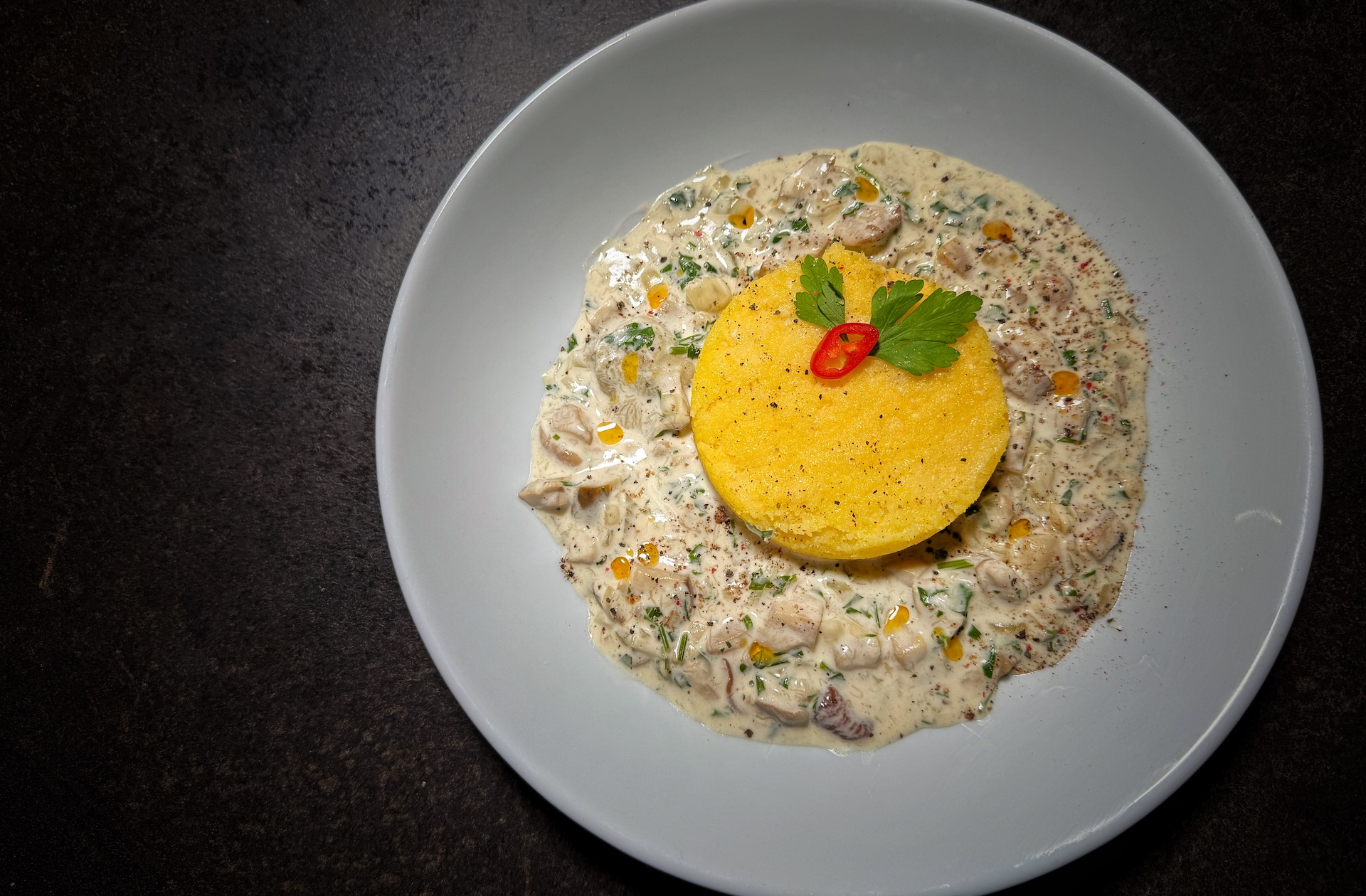
Fried Creamy Polenta with Porcini Mushrooms
Creamy porcini mushrooms with soft polenta, cooked the cheaper way. A comforting Romanian-inspired dish using frozen porcini for maximum flavor.

Servings
.svg)
Prep Time

Cook Time

Ingredients

Total Time
Ingredients
Porcini Mushroom Cream Sauce
- 500 g frozen porcini mushrooms
- 1 medium onion, finely chopped
- 2–3 garlic cloves, minced
- 200 ml cooking cream
- 1 tsp cornstarch
- 50 g Parmesan, finely grated
- 60 ml water (¼ cup)
- 2 tbsp olive oil
- Salt, to taste
- Black pepper, to taste
- 1 cup fresh parsley, finely chopped
Creamy Polenta
- 120 g instant polenta (cornmeal)
- 400 ml milk
- 2 tbsp butter
- Salt, to taste
- 1 tbsp olive oil (for warming/grilling)
Equipment
Instructions
If you’ve ever looked at porcini mushroom price tags in stores, you know they can feel intimidating. Fresh porcini mushroom availability is unpredictable, and when you do find them, they often feel like a special-occasion ingredient. That’s exactly why frozen porcini deserve more credit. When cooked correctly, they release incredible flavor, create their own sauce, and allow you to build rich, layered dishes without unnecessary complexity.
This dish is inspired by ciulama de hribi, a traditional Romanian mushroom stew served with polenta.
My version respects the core of that dish while adapting the technique to how I like to cook at home: lighter thickening, more control over texture, and a deliberate contrast between hot, almost bubbling mushrooms and gently warmed creamy polenta.
Instructions
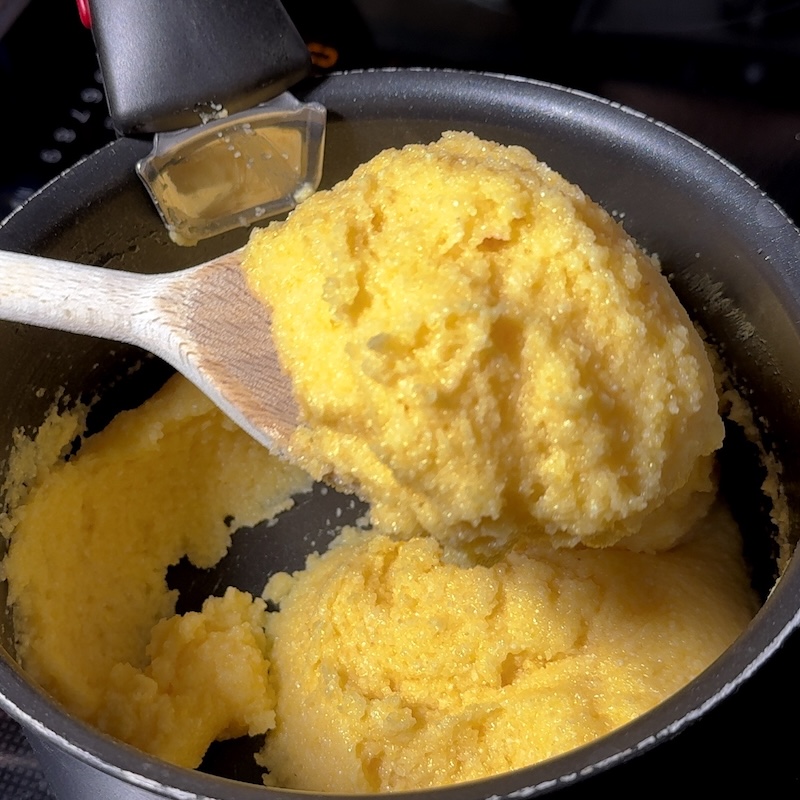
- Creamy Polenta: In a saucepan, heat milk with butter over medium-low heat.
- Season lightly with salt.
- Gradually add instant polenta, stirring constantly.
- Cook until thick, smooth, and cohesive for about 2-3 minutes.
- I like to pour the polenta into two lightly greased individual molds.
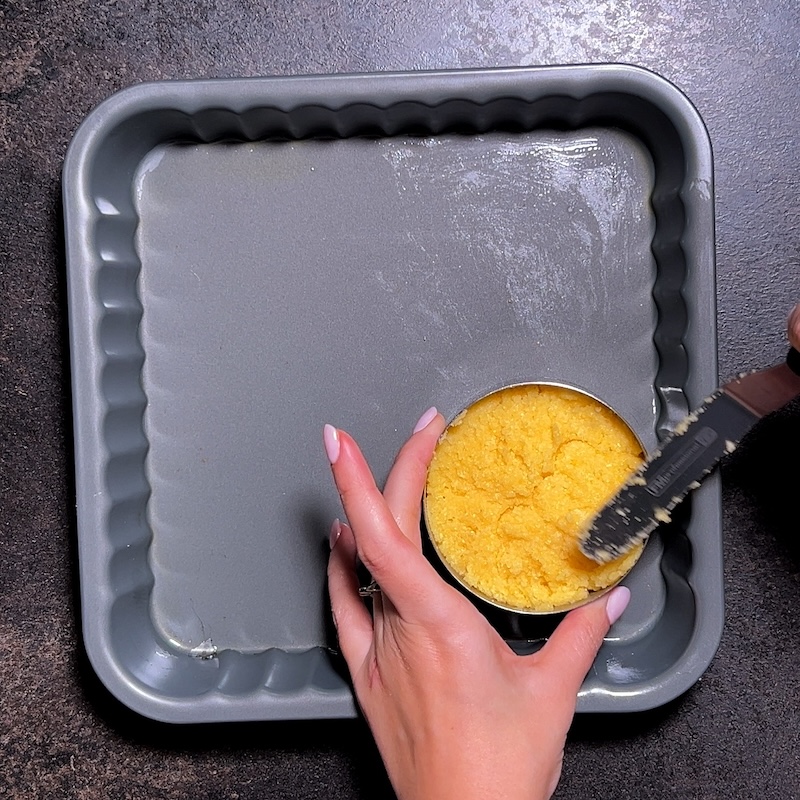
- However, you can use a bigger tray greased and cut squares when you are ready to serve.
- Anyway, cover with a plastic wrap and refrigerate for at least 1 hour, until fully set.
- This approach keeps the polenta creamy even after chilling, while giving it enough structure to hold its shape later.
- Porcini Mushroom Cream Sauce: Sauté diced onion and garlic in olive oil for a couple of minutes until glossy and soft. Place frozen porcini mushrooms directly into a pan.
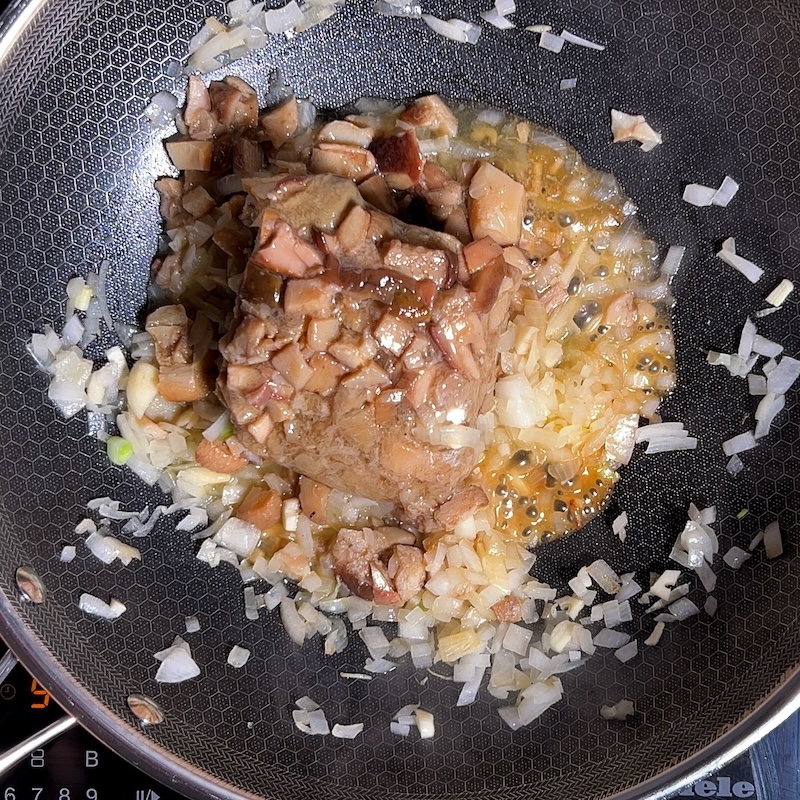
- Add ¼ cup water, cover, and cook on low heat for 20 minutes.
- The mushrooms will slowly soften and release their liquid.
- In a bowl, mix: cooking cream and cornstarch.
- Add the mixture to the mushrooms.
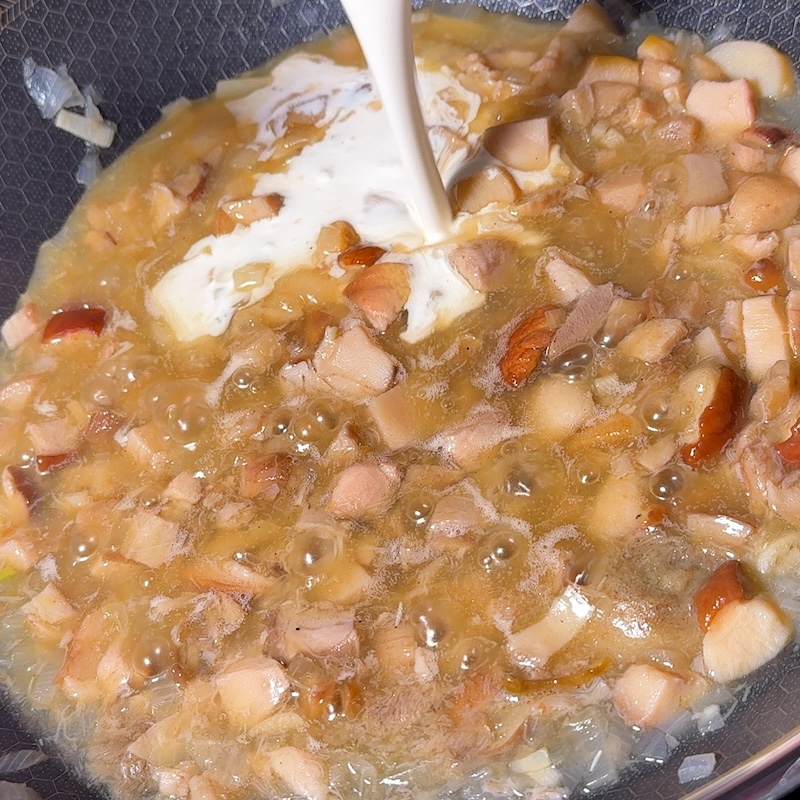
- Season with salt and pepper, then add grated Parmesan.
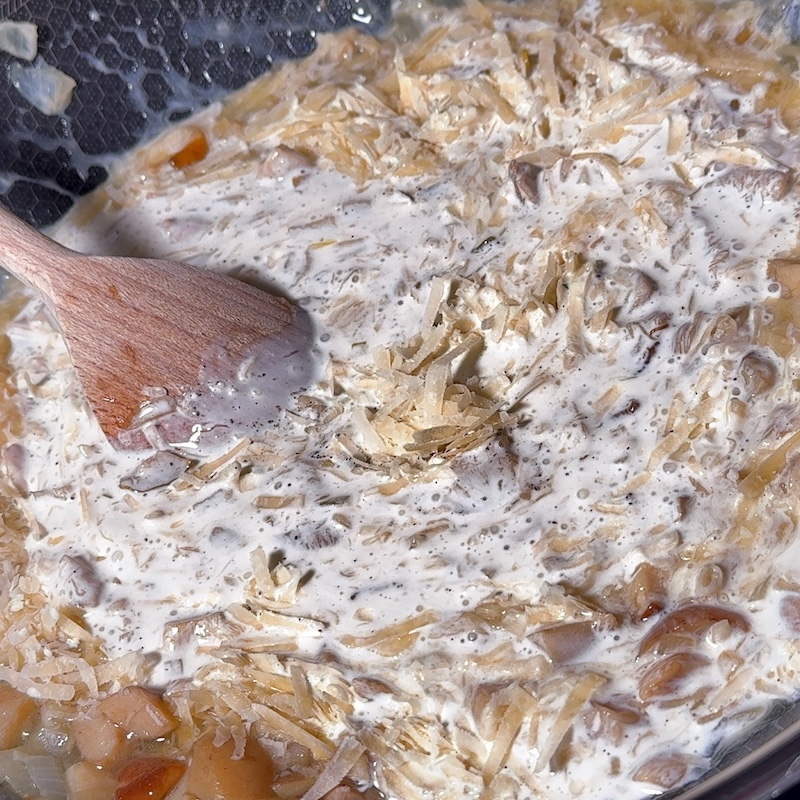
- Stir gently and heat just until lightly thickened.
- Finish with fresh chopped parsley.
- Cover again, and cook on low heat for 2 extra minutes.
- Then, remove from heat.
- The sauce should be spoonable, glossy, and intensely mushroom-forward.
- Warming the Polenta & Final Assembly: Remove the chilled polenta from the molds.
- Warm it gently on a grill pan or griddle with a bit of olive oil.
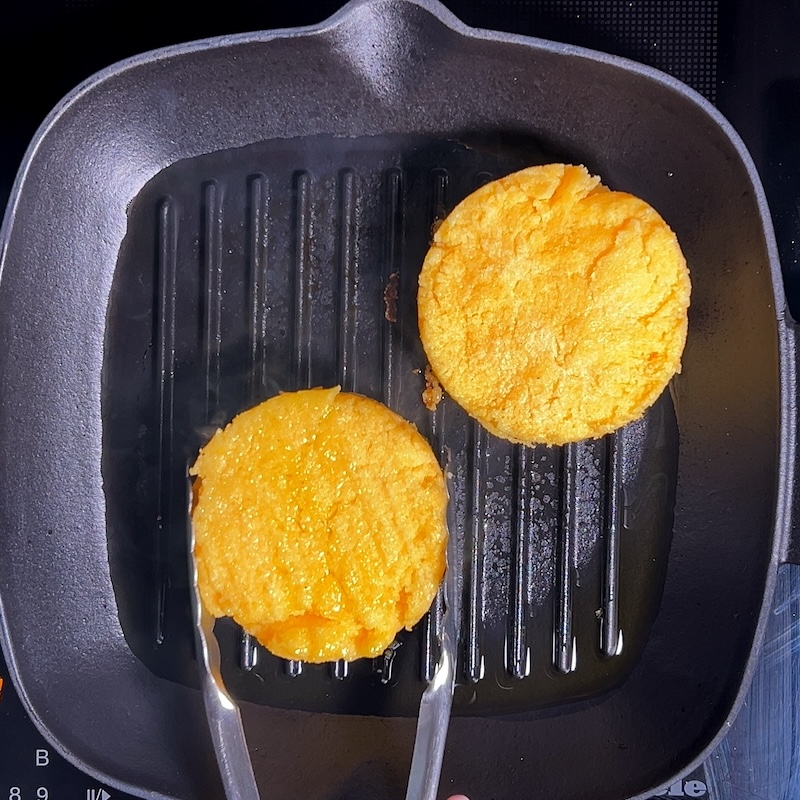
- Do not char it — the goal is warmth, not crust.
- Let the butter soften and melt slightly.
- Serve the polenta with the lush sauce immediately.
As a note, you will end up with leftover sauce. I suggest storing it in the fridge and using it the next day as pasta sauce. It will be mindblowing.
About This Recipe: Tradition, Place & Personal Adaptation
This recipe comes straight from where I grew up. In the Suceava region of northern Romania, forests are dense, generous, and deeply tied to everyday cooking. Wild mushrooms—especially porcini (hribi)—are not a luxury ingredient here; they are seasonal staples. Families go mushroom foraging as naturally as going to the market, and dishes like ciulama de hribi exist precisely because the land provides abundantly.
Traditionally, ciulama de hribi is a humble, home-style dish. The mushrooms are cooked slowly, enriched with regular sour cream, and thickened with flour. It’s served alongside classic boiled polenta, soft and simple, meant to carry the sauce rather than compete with it. The dish isn’t about refinement—it’s about warmth, familiarity, and making the most of what’s available.
When I cook it at home, I start from the same philosophy: mushrooms first, patience over speed, and restraint with seasoning. Where I adapt the recipe is in the technique, not the soul. Instead of flour, I use a small amount of cornstarch, which allows the sauce to thicken while staying cleaner and lighter on the palate. Parmesan is not part of the traditional recipe—and that’s intentional on my part. I use it sparingly, not to turn this into an Italian dish, but to enhance umami and underline what the porcini already bring naturally.
The polenta is where my personal approach becomes most visible. In many homes, polenta is cooked in water and served immediately. I prefer cooking it in milk and letting it set. This gives it body without losing creaminess and allows it to be reheated gently. I don’t want a crust or char here—just warmth. The contrast matters: softly warmed polenta against mushrooms that are properly hot, almost bubbling. That temperature difference is what makes the dish feel alive on the plate.
From a nutritional perspective, this is a quietly balanced meal. Porcini mushrooms are low in calories but rich in antioxidants, potassium, and B vitamins. Polenta is naturally gluten-free, easy to digest, and deeply satisfying without being heavy. Together, they create the kind of food that nourishes both physically and emotionally—comfort food that respects tradition while fitting naturally into the way we cook today.
FAQ – A Few Common Questions
Before you cook, here are some things people often ask about this dish:
Q: Is polenta healthy?
A: Yes. Polenta provides steady energy, is easy to digest, and works well in balanced meals.
Q: Is polenta gluten free?
A: Absolutely. Cornmeal contains no gluten.
Q: Polenta vs grits – what’s the difference?
A: Polenta is typically coarser and sets firmer, making it ideal for molding or slicing.
Q: Is polenta healthy for everyday cooking?
A: Yes, especially when paired with vegetables or mushrooms instead of heavy sauces.
Q: Why choose frozen porcini over fresh?
A: Frozen porcini mushroom options are more affordable, more consistent, and perfect for slow-cooked sauces.
Conclusion
This dish proves that tradition doesn’t need to be rewritten to feel relevant. With a few thoughtful adjustments, you can keep the heart of a recipe intact while making it work beautifully in a modern home kitchen.
I hope you’ll test this polenta recipe and experience that contrast between hot porcini mushroom sauce and gently warmed creamy polenta for yourself. If you do, don’t forget to tag us — we love seeing your versions.
The full video recipe is available on YouTube, so make sure to check it out, and if you enjoy it, don’t forget to like, subscribe, and keep cooking with curiosity.