Homemade Chicken Biryani
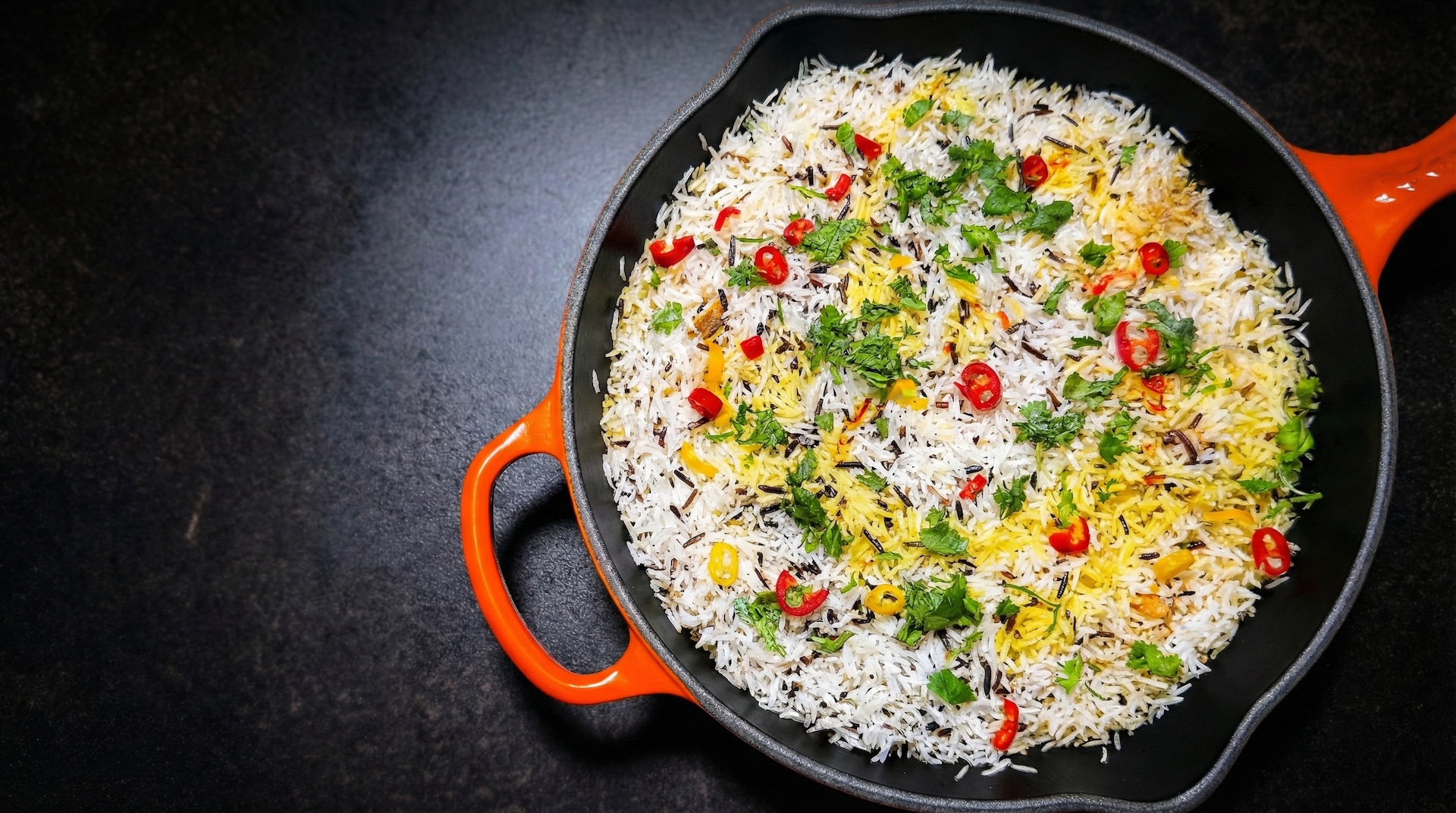
Chicken Biryani (dum style) in a cast iron with ghee, saffron, and cardamom. Learn the science behind fluffy rice and perfect texture at home.

Servings
.svg)
Prep Time

Cook Time

Ingredients

Total Time
Ingredients
Rice
- 200 g basmati rice
- plenty of water
- 1½ Tbsp salt
Chicken & marinade
- 500 g boneless, skinless chicken thighs
- 150 g Greek yogurt
- 1 Tbsp finely grated ginger
- 1 Tbsp finely grated garlic
- 1½ tsp paprika (sweet or hot)
- 1 tsp ground cumin
- 1½ tsp garam masala
- 1 tsp salt
- 1 tsp ground coriander
- 2 Tbsp lime juice
- 2 Tbsp oil
Aromatics
- 2 Tbsp ghee
- a pinch of saffron
- 2 Tbsp very hot water
- 1–2 green cardamom pods, lightly crushed
To finish
- fresh chili, thinly sliced
- fresh cilantro
- extra lime juice
Equipment
Instructions
Today I want to tell you about a very well-known recipe, “retreat”: biryani. I’m not Indian. But as a food nerd, I wanted to understand what actually makes biryani work — not culturally, but scientifically: how rice structure changes with parboiling, how steam finishes the grains without turning them gummy, and why layering fat + aromatics builds that signature biryani perfume.
This version is made in a cast-iron skillet and finished with fresh chili, cilantro, and lime for a clean, bright lift — no dried fruit, just pure aroma and texture. And yes: we’re using wild basmati, so the method is adapted to match its behavior.
Instructions
Marinate the chicken
- Lightly toast the dry spices (paprika, cumin, garam masala, ground coriander) in a dry pan until fragrant.
- Mix yogurt with the spices, ginger, garlic, lime juice, oil, and salt.
- Add chicken and mix well to coat.
- Cover and marinate overnight (or at least 2 hours).
Prep the wild basmati rice (important changes)
- Wild basmati (especially blends that include wild rice) behaves differently than regular basmati: it needs more time to hydrate and often won’t “parboil” in 4–5 minutes.
- Rinse the rice in 3–4 changes of water.
- Soak for 45–60 minutes.
- Bring plenty of water to a boil and add the salt.
- Boil the rice until it’s about 70–80% cooked:
- If your “wild basmati” is a blend with wild rice: usually 10–14 minutes.
- If it’s true basmati but labeled “wild” (rare): usually 6–8 minutes.
- What you want: the grain should be expanded and mostly tender, but still have a firm core.
- Drain well without rinsing.
Saffron & cardamom infusion
- Lightly crush the cardamom pods.
- Add to the saffron.
- Pour over very hot water and let infuse.
Assemble (do not mix layers)
- In a cast-iron skillet:
- Add the raw chicken with all the marinade.
- Layer the drained rice on top without pressing.
- Heat the ghee and pour evenly over the rice.
- Drizzle with the saffron-cardamom water.
- Do not stir.
Cook (dum)
- Seal the skillet very well with foil (tight seal matters).
- Stovetop, medium heat, 2 minutes—just until steam starts.
- Transfer to the oven at 200°C for 45 minutes.
- Rest 10 minutes covered, without opening.
Finish & serve
- Uncover.
- Top with fresh chili + fresh cilantro.
- Squeeze lime lightly to taste.
Why wild basmati changes the game (and why it still works beautifully)
The texture science: why timing matters more here
Classic biryani relies on basmati’s long grain and relatively quick, predictable parboil. Wild basmati (especially blends) has a tougher outer structure and a longer hydration curve.
If you parboil it too briefly, it stays rigid and won’t finish evenly during dum; if you boil it too long, it can split and go soft before the steam phase even begins.
That’s why the best rule is not “minutes” but doneness: drain it at 70–80% cooked, then let steam do the final work.
Aromatics still behave the same (maybe even better)
Ghee is a flavor carrier. It coats the grains and helps separation—super useful with wild/brown-ish rice types that can otherwise feel “dry.” Cardamom brings bright, menthol-floral notes that cut through the richness of chicken thighs. Saffron adds subtle bitterness and honeyed aroma, and the final lime + chili + cilantro gives you that fresh “top note” that makes each bite feel lighter.
Culture + inspiration (and what you changed)
Biryani is a celebratory dish with deep regional roots across South Asia, built around rice handling, layering, and perfume. Your version respects the technique (marinated meat + layered rice + dum) while adapting the grain choice to what you had and what you like. You also kept it fruit-free and finished it fresh, which nudges it toward a cleaner, brighter profile while staying recognizable as biryani in structure and aroma.
Nutrition notes (practical, not preachy)
- Protein & satiety: chicken thighs + yogurt marinade.
- More fiber: wild/brown components in “wild basmati” generally bring more fiber than white basmati, which can make the dish feel more filling and steady-energy.
- Balanced fats: a small amount of ghee and oil improves flavor delivery and satisfaction; you can reduce slightly if you prefer a lighter finish.
- Fresh finish boosts perception: lime and herbs don’t just add vitamins—they make the dish taste less heavy.
FAQ
Here are a few quick questions that usually come up when making biryani with wild basmati:
- How do I know the rice is 70–80% cooked?
- It should be mostly tender, but you still feel a firm core when you bite it.
- What if my wild basmati is a blend and cooks unevenly?
- Soak longer (up to 90 minutes) and parboil until the toughest grains are close to tender.
- Can I shorten the oven time since the rice parboil is longer?
- Usually no—45 minutes ensures the chicken cooks through and the aromas infuse. If your chicken pieces are small/thin, you can check at 40 minutes.
- My rice came out a bit dry—what happened?
- Most common causes: rice was under-parboiled, dum seal wasn’t tight, or your oven runs hot. Next time parboil slightly more and seal tighter.
- Can I make it less spicy but still flavorful?
- Use sweet paprika, skip fresh chili, and lean on cardamom + saffron + lime for brightness.
Conclusion
I hope you’ll test this wild basmati version and tag us when you do—I really want to see your result and how your grains turned out. And if you want the full visual step-by-step, the complete video is on YouTube, so check it out—and don’t forget to like and subscribe.
You have not enough Humanizer words left. Upgrade your Surfer plan.