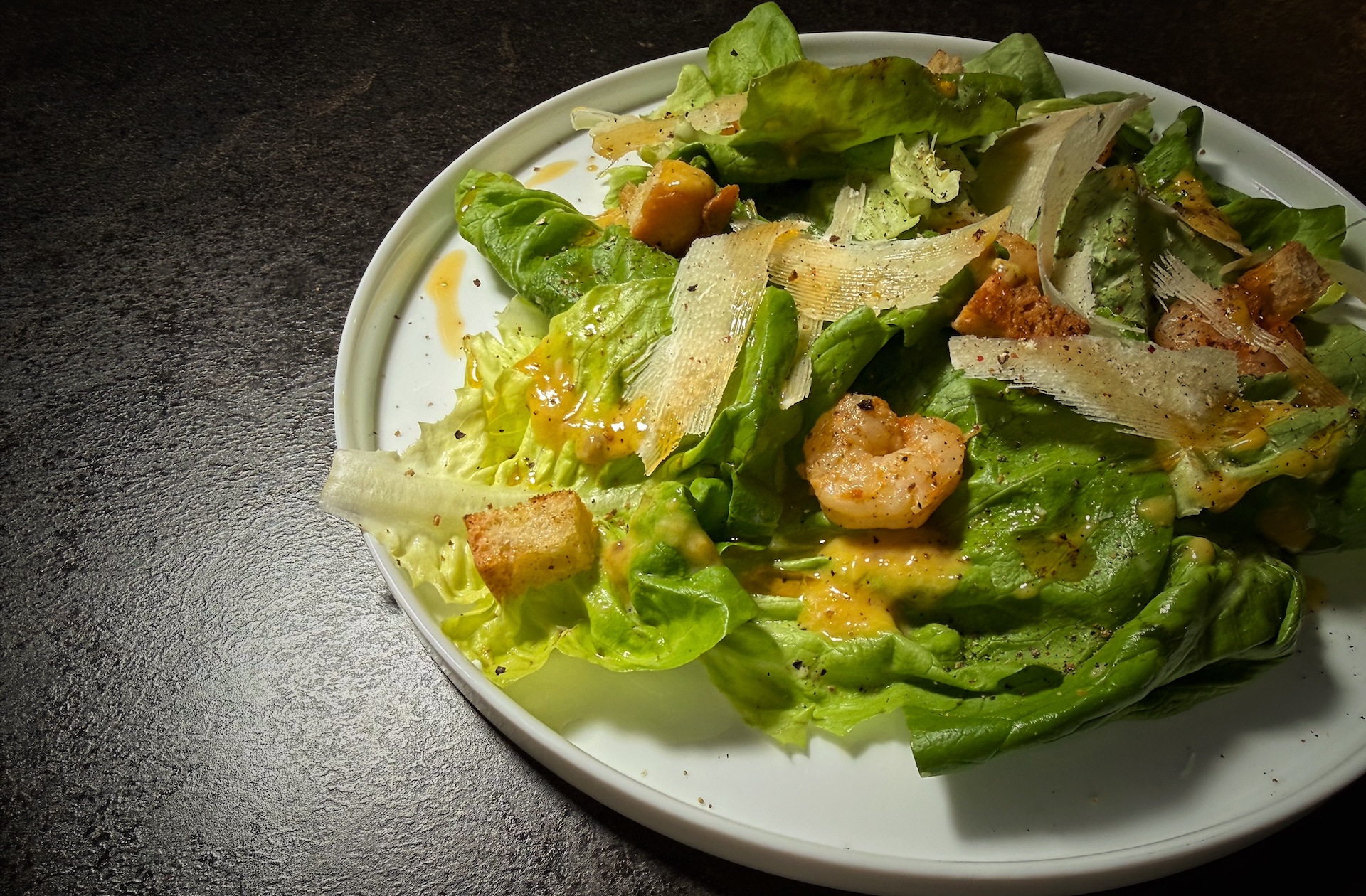
Simple and Spicy Shrimp Caesar Salad
Bold shrimp Caesar salad with homemade croutons and creamy dressing. A classic recipe with a spicy twist that turns a side into a real meal.

Servings
.svg)
Prep Time

Cook Time

Ingredients

Total Time
Ingredients
Croutons
- 4–5 slices stale bread (any type)
- 1 tbsp olive oil
- Salt, to taste
- Garlic powder, to taste
- Black pepper (optional)
Caesar Dressing
- 2 anchovy fillets
- 4 garlic cloves
- 1 egg yolk
- 1 tbsp Dijon mustard
- 30 ml neutral oil (sunflower or similar)
- 2 tbsp finely grated Parmesan cheese
- 1–2 tsp lemon juice (to taste)
- ½–1 tsp Worcestershire sauce
- Freshly ground black pepper
- Salt (use carefully, to taste)
Spicy Shrimp
- 200 g peeled, pre-cooked shrimp
- 1 tbsp olive oil
- Salt, to taste
- Freshly ground black pepper
- Cayenne pepper, to taste
- Lemon juice, for finishing
Salad Assembly
- 1 large head romaine lettuce or Boston lettuce
- Extra Parmesan cheese, shaved or finely grated
- Extra olive oil, for finishing
- Freshly ground black pepper
Equipment
- Oven
- Baking tray
- Large mixing bowl
- Small bowl (for dressing)
- Whisk
- Chef’s knife
- Cutting board
- Heavy pan (preferably cast iron)
- Microplane or fine grater
- Paper towels
Instructions
Today I want to talk to you about a classic recipe with a small twist—one that most of us know by heart, yet rarely question or truly analyze.
The Caesar salad is often treated as a safe, predictable option, but when you look closer, it's actually a dish built on strong opinions, bold flavors, and smart technique.
In this version, I stayed close to the original spirit while adapting a few elements to better fit how I cook at home. This Shrimp Caesar Salad recipe is about balance: crisp textures, creamy depth, and ingredients that make sense together rather than just following tradition for tradition's sake.
Instructions
- Croutons: We start with the croutons, because they need time to bake and cool.
- Cut any stale bread you have around into chunky pieces.
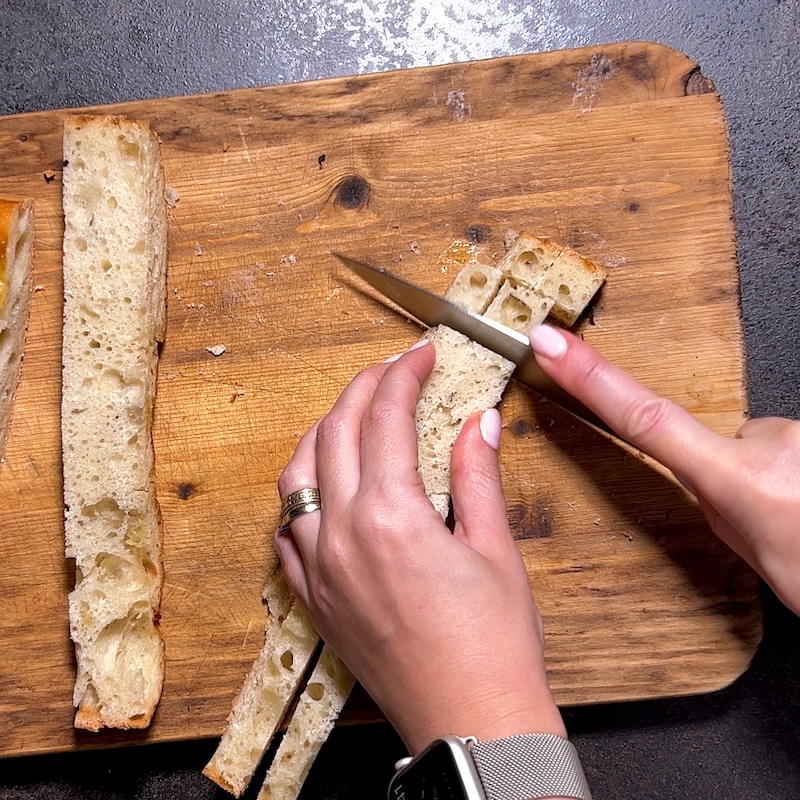
- Place them in a bowl, drizzle with olive oil, and season with salt, garlic powder, and paprika. Toss well so everything is evenly coated.
- Spread the bread on a baking tray in a single layer.
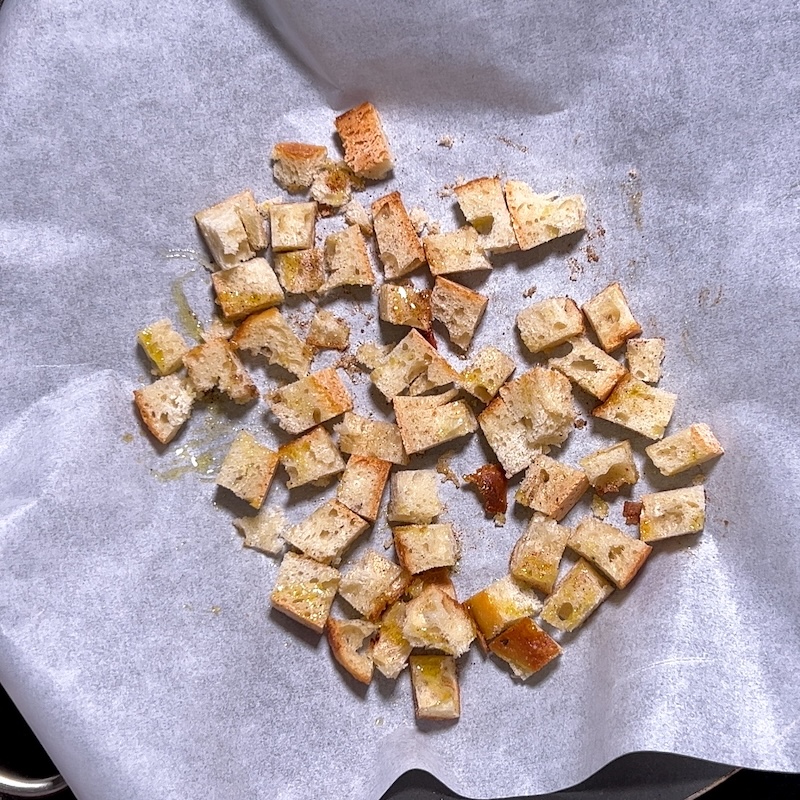
- Bake in a preheated oven at 180°C for 10–15 minutes, until golden and fully crisp. Set aside to cool. Properly baked croutons should stay crunchy even after touching the dressing.
- Caesar Dressing: While the croutons are in the oven, prepare the dressing.
- In a bowl, mix the finely grated garlic, chopped anchovies, Dijon mustard, and egg yolk.
- Start whisking and slowly add the oil, a little at a time, just like making mayonnaise.
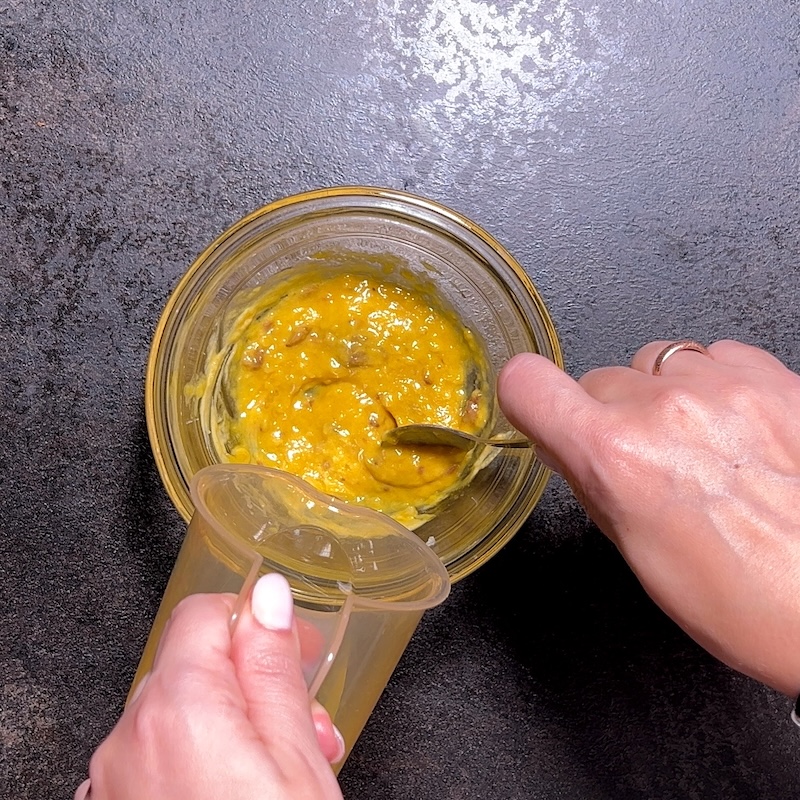
- Once the dressing thickens, add the finely grated Parmesan, lemon juice, and Worcestershire sauce. Taste and adjust.
- Shrimp: Even though the shrimp we are using are pre-cooked and peeled, they still need attention.
- Always check the back of each shrimp and remove the dark vein if it's still there.
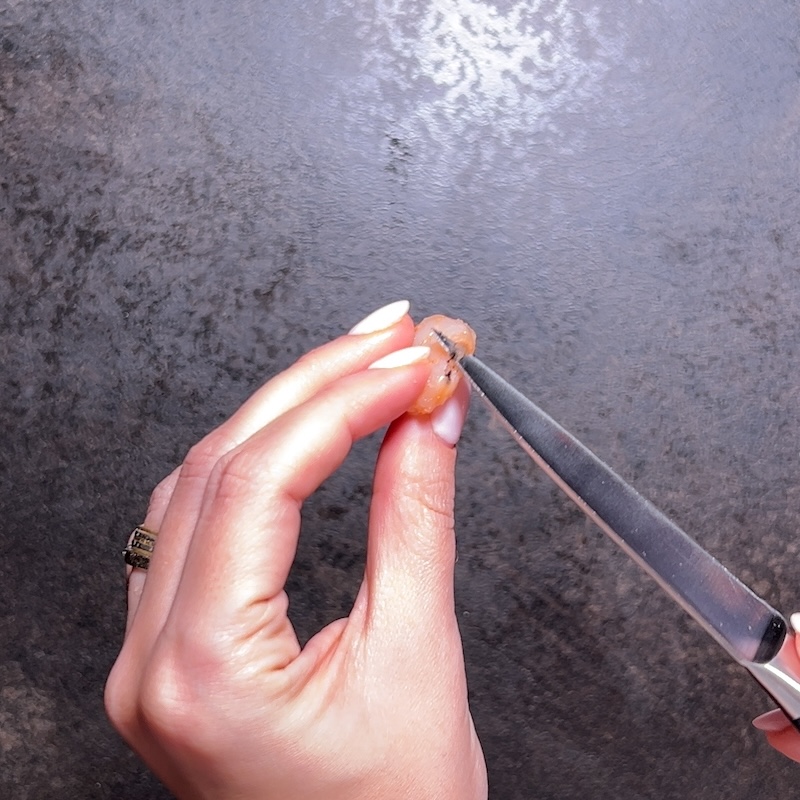
- This is the digestive tract, and leaving it in can affect both texture and flavor, sometimes adding a bitter note once cooked.
- Pat the shrimp very dry with paper towels. Season with cayenne, salt, and pepper.
- Heat a pan (ideally cast iron) until very hot. Cook the shrimp for about 30 seconds per side.
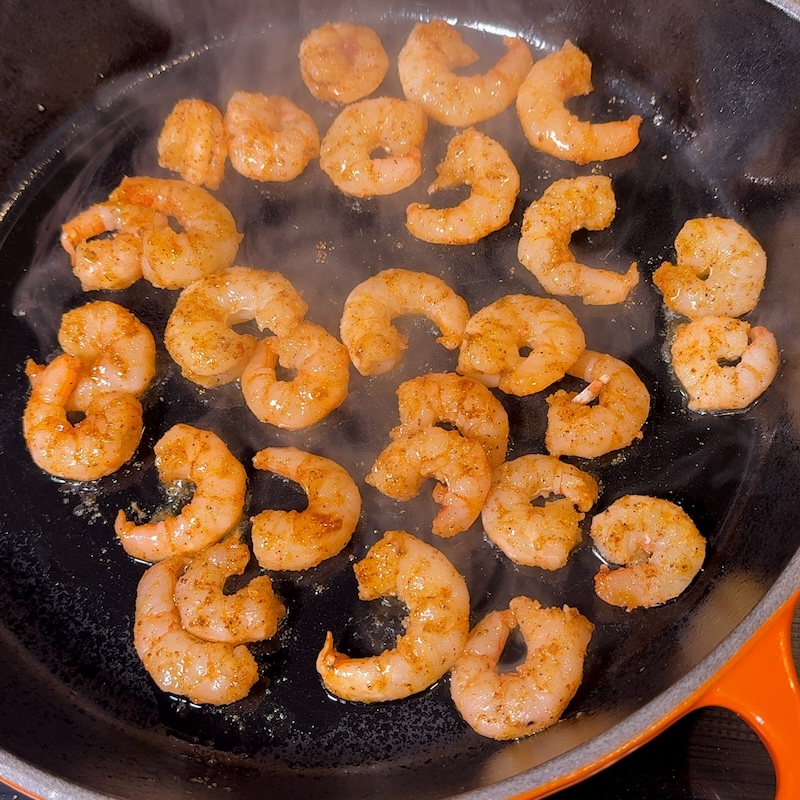
- Then remove immediately and finish with a squeeze of lemon juice. Overcooking is the fastest way to ruin pre-cooked shrimp.
- Salad Assembly: Traditionally, a Caesar salad recipe uses romaine lettuce for its crunch.
- In this version, I use Boston lettuce, not as a random twist but because I have access to a great local source.
- It's fresh, delicate, and slightly buttery, which works beautifully with the bold dressing.
- Tear the lettuce by hand and dry it very well.
- Toss gently with 1–2 tablespoons of dressing.

- Plate the salad, add the shrimp, croutons, extra Parmesan, and optionally a little more dressing. Serve immediately.
Ingredients, Technique, and Why This Works
What makes a best Caesar salad recipe isn't excess—it's restraint. This dish works because each component serves a clear purpose.
The shrimp add sweetness and protein, the dressing brings acidity and umami, and the croutons provide texture.
Understanding the Caesar salad ingredients and how they interact is far more important than adding extras.
History, Culture, and Personal Inspiration
The Caesar salad's origin dates back to the 1920s in Tijuana, Mexico, where Caesar Cardini created the dish out of necessity rather than design. It was never meant to be complicated.
The original Caesar recipe relied on technique, quality ingredients, and confidence.
My inspiration comes from treating this dish the same way it was originally intended: bold, practical, and adaptable.
By using shrimp instead of chicken, which you can often see in twisted Caesar salad versions, adjusting the dressing texture, and choosing Boston lettuce from a local producer, this version feels personal without losing its identity.
That's also why I consider this an easy Caesar salad—not because it skips steps, but because every step makes sense.
Nutrition and Balance
This shrimp Caesar salad recipe offers a solid nutritional profile. Shrimp are high in protein and low in fat, the lettuce provides fiber and micronutrients, and the fats in the dressing help with nutrient absorption. When portioned correctly, this Caesar salad works perfectly as a main dish, offering satiety without heaviness.
Frequently Asked Questions
Below are some of the most common questions people ask when learning how to make Caesar salad at home.
Q: What is Caesar salad dressing made of?
A: Classic dressing includes garlic, anchovies, egg yolk, oil, lemon juice, Parmesan, and Worcestershire sauce.
Q: Is Caesar salad healthy?
A: Yes, especially when made at home, where you control the ingredients and portions.
Q: Who is Caesar salad named after?
A: It's named after Caesar Cardini, the chef who created it.
Q: Where does Caesar salad come from?
A: The Caesar salad originated in Tijuana, Mexico.
Q: Can Caesar salad make you sick?
A: Only if ingredients like raw egg or seafood are mishandled. Freshness and hygiene matter.
Q: Can Caesar salad cause heartburn?
A: For some people, yes—mainly due to garlic, lemon juice, or rich fats.
Conclusion
I hope you'll test this dish at home and make it your own. If you do, tag us—we genuinely love seeing your versions. The full video recipe is available on our YouTube channel, so check it out, and don't forget to like and subscribe for more recipes like this one.
Nutrition Facts / Serving
- Calories: ~610 kcal
- Total Fat: ~38 g
- Cholesterol: ~245 mg
- Sodium: ~1,450 mg
- Potassium: ~520 mg
- Total Carbohydrate: ~32 g
- Sugars: ~4 g
- Protein: ~36 g