Kinugawa Onsen on a Plate: What We Ate and Loved
Where to eat in Kinugawa Onsen: small soba shops, yuba and hokke lunches, a relaxed wagyu night, plus simple tips on reservations, cash, trains, and onsen.
We spent a month in Japan last year, and the experience was so extraordinary that it took me a long time to put it into words.
And after talking about the big and impressive Tokyo, this chapter of our Japan series zooms into a tiny place with a big heart: Kinugawa Onsen, a hot-spring town in Nikko, Tochigi.
Where is Kinugawa Onsen—and how to get there
Kinugawa Onsen sits along the Kinugawa River, just north of central Nikko.
From Tokyo, limited-express trains from Asakusa (and sometimes Shinjuku) roll straight into Kinugawa-Onsen Station. This means that you don't need a car. Step off the train and the tempo drops: river, cedars, steam.
Truth be told, when we planned this journey, we planned to blitz Nikko's temples, but the weather had other plans. So we pivoted to two days of hot springs, comfort food, and sleep while our bodies caught up with the jet lag.
Therefore, this guide is what to eat, where to eat it, and a few small choices that make a short stay taste better when visiting Kinugawa Onsen.
Quick Travel Note (Worth Reading)
One small thing that saves big headaches: travel insurance. Kinugawa Onsen isn’t remote-remote, but it’s a river town in the hills—rain can shuffle train schedules, plans change, ankles meet slick onsen steps, and clinics may ask for upfront payment.
We travel with SafetyWing because it’s affordable, flexible, and easy to turn on for side trips like this (Tokyo → Nikko → onsen detour) without overthinking dates or paperwork. It’s not about expecting trouble; it’s about relaxing into the hot springs and the slow lunches knowing you’re covered. With that squared away, let’s eat.
Why small and local wins here
Leaving Tokyo's neon changes the brief. Kinugawa Onsen is a soak-and-stroll town: family soba shops, mom-and-pop cafés, snug izakaya, plus one or two polished splurges.
Prices are kind—everyday dining often undercuts Western Europe.
We still suggest reserving dinners when you can (Tabelog works); otherwise, message or email. Japan doesn't really use WhatsApp, so don't wait for replies there.
About our stay
We didn't chase breakfast spots because our hotel included it. We chose Hotel Sunshine Kinugawa for its onsen access and a Japanese-Style Superior Room that felt spacious compared to big-city stays.
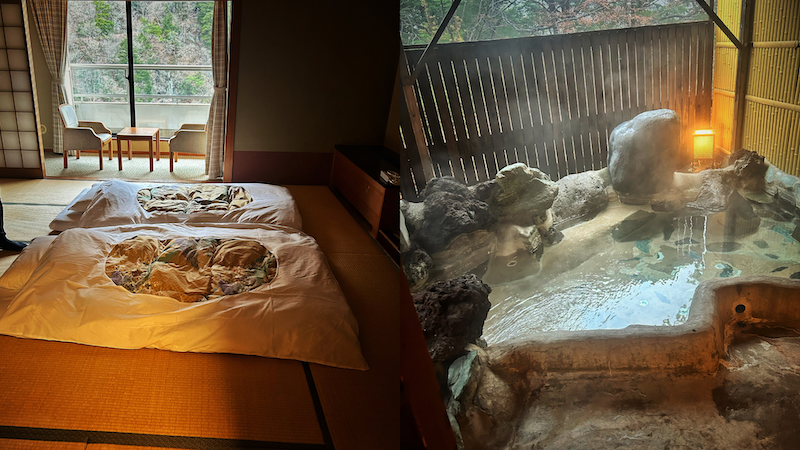
Quick onsen note for tattoos: some public baths still restrict visible tattoos. Many places have private baths or allow coverage stickers—always check before you book. Verify tattoo rules and private-bath options if necessary.
Where we ate (and why you should too)
Below are the places we tried, with just enough context to help you plan. Food first, logistics second.
Yamajo — A Small Soba House That Knows Exactly What It's Doing
It's safe to say that Kinugawa slows the pulse, and Yamajo matches that tempo. This is a family-run soba shop on a quiet side street: a few tables, a short menu, cash only, and full of locals eating lunch.
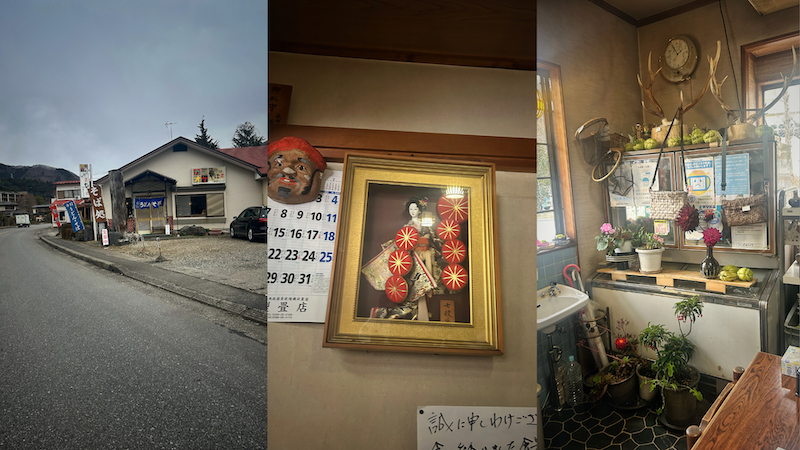
This is soba in its everyday form—no tricks, just noodles that taste fresh and a broth that's clean and calm.
Soba matters here because it's both regional and practical. Buckwheat brings a toasty aroma and a gentle chew; in mountain towns, the "inaka" (country) cut is slightly wider and more rustic.
What we ordered & how it landed:
We went with a tempura menu with soba noodles and miso soup.
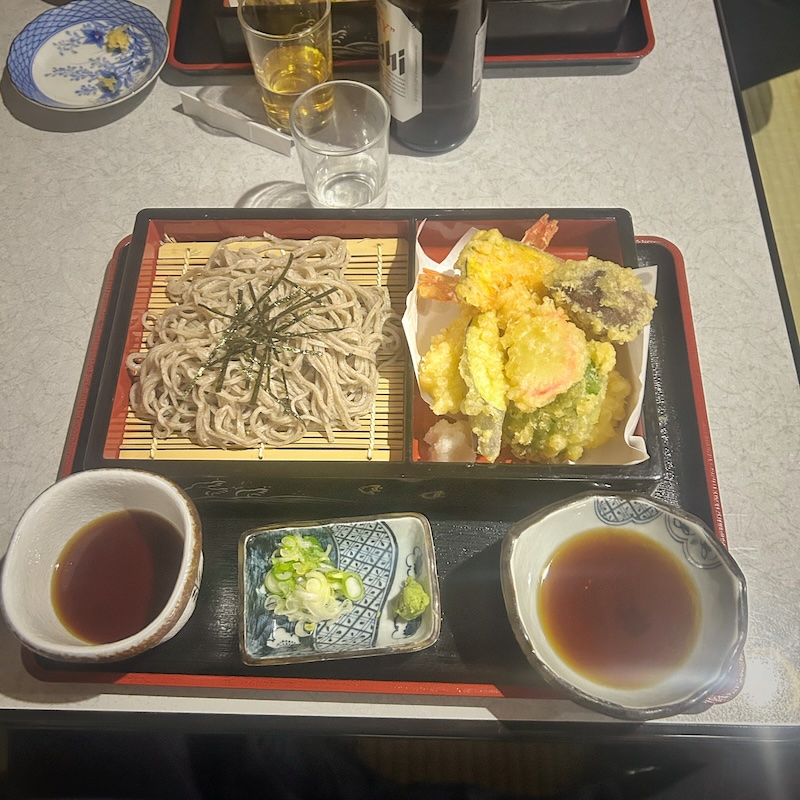
The noodles had that gentle elasticity you only get when they're fresh, the broth tasted balanced rather than salty, and the tempura was light enough to disappear without guilt. Simple lunch, full reset, and a big smile on our faces.
Roughly what to expect: simple room, quick turnover at lunch, hand-cut noodles with real buckwheat character, light tempura, cash only, and a quiet, unhurried pace that makes you put your phone away.
Kanmi to Oshokuji Suzukawa — Yuba, Hokke, and a Set Lunch That Teaches You the Region
Suzukawa sits a short walk from the station and does the useful thing well: a proper teishoku (set lunch) that lets you try a few local basics in one go. The room is plain in a good way—clean, friendly, and easy to settle into.
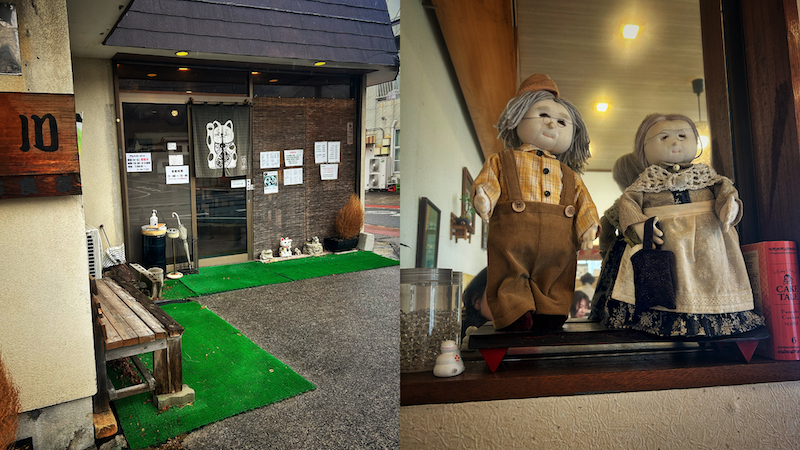
If you're curious about the area's soy culture, order yuba. When hot soy milk forms a delicate skin, it's lifted, folded, and served fresh or gently simmered—subtle and silky.
Balance it with hokke (Atka mackerel), split and grilled until the skin blisters and the flesh flakes. It's rich, but the set format—rice, miso soup, a couple of small sides—keeps everything in check.
Hiyayakko (chilled tofu with soy, ginger, and scallion) is a clean reset between bites, and tonkatsu is there if you want a familiar anchor.
What we ordered & how it landed:
We built a two-tray lunch: one yuba set (plus hiyayakko) and one grilled hokke set. The yuba was delicate and surprisingly satisfying; the hokke was fragrant, flaky, and carried the meal. We also tried the tonkatsu set—crisp crust, juicy center, no heaviness.

Service was kind, the pace unhurried, and the bill friendlier than we expected for how complete it felt.
Roughly what to expect: straightforward service, fair prices, a tray that feels complete without being heavy, cash preferred, and a calm lunch that sets up the rest of your day.
Sacchan — A Neighborhood Izakaya That Feels Instantly Right
Sacchan is small: a handful of tables, a short counter, and an older couple running the room with quiet confidence. There's no English menu, but pointing works, and the welcome is warm. It's the kind of izakaya where you order a bit at a time and let dinner find its own pace.
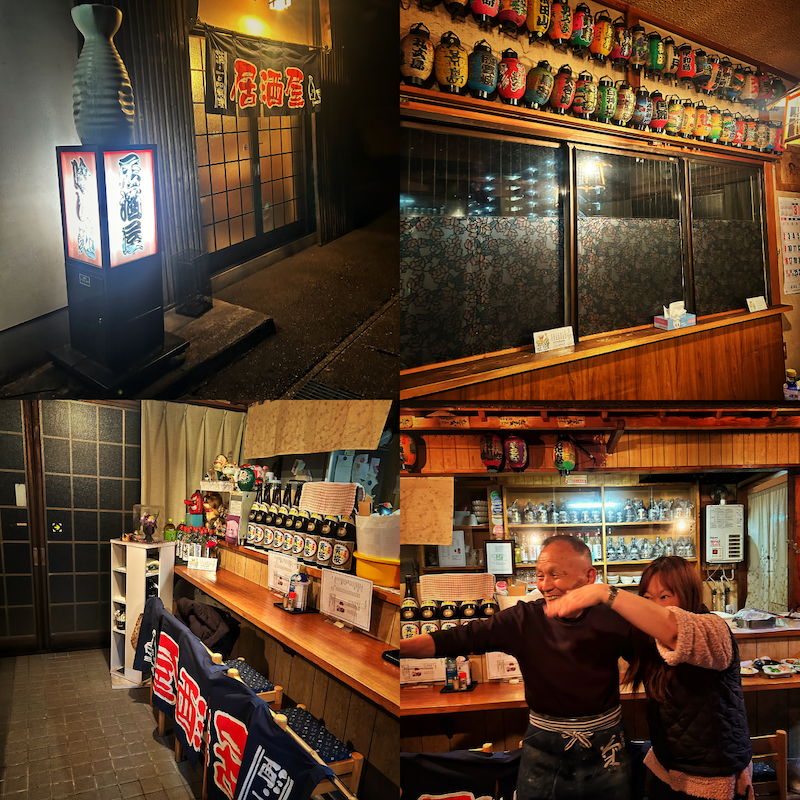
Build the table across a few styles: something fried (karaage or a thin-crust cutlet), something grilled (fish or skewers), a simmered or vinegared dish for contrast, and a rice or noodle finish. Nothing is showy; everything is seasoned properly and cooked like it's been done a thousand times.
What we ordered & how it landed:
We basically surrendered and ordered more than half the chalkboard. Every plate was cleanly cooked and properly seasoned—no gimmicks.

It was also the cheapest "how did we eat this much?" dinner of the trip. If you ask us about our favorite moments in Japan, this is one of them.
Roughly what to expect: early is best for seats, cash is safest, patient service, well-made standards, and the kind of easy, satisfying dinner that leaves you planning a return visit before you've even paid.
Galerie Café Painto E — Coffee, Pancakes, and a Practical Midday Reset
Near Kinugawa-Onsen Station, Painto E is a reliable pause between onsen and dinner. It's a small gallery-style café with decent coffee, soft seating, and outlets—useful if you're recharging phones and yourself. The laundromat across the street makes it a convenient stop when travel chores stack up.
What we ordered & how it landed:
We kept it simple: coffee and a plate of fluffy pancakes to split while a laundry cycle ran.
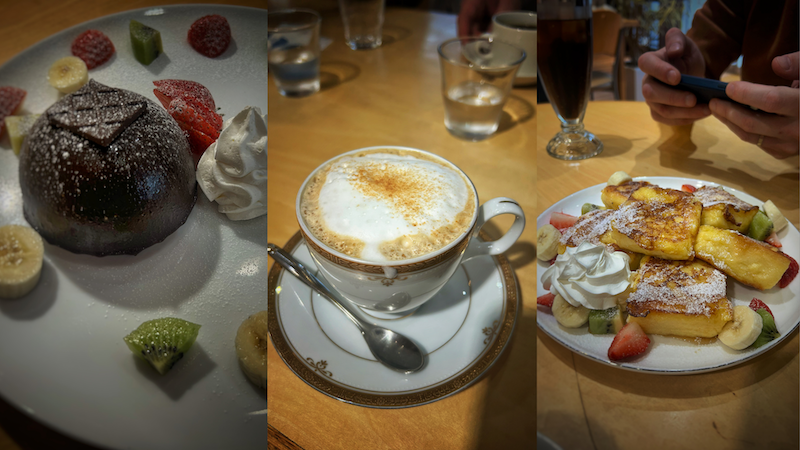
Nothing overpromised; everything did its job. We used the time to map dinner and answer messages, then headed out feeling reset rather than sugared out.
Roughly what to expect: steady coffee, friendly but low-key service, comfortable tables, and a good staging point a few minutes from trains and buses.
Keikoku no Restaurant Steak Yoshino — A Quiet Wagyu Night That Feels Like an Occasion
Yoshino is your polished option: big windows, a valley view, and course menus that make ordering easy.
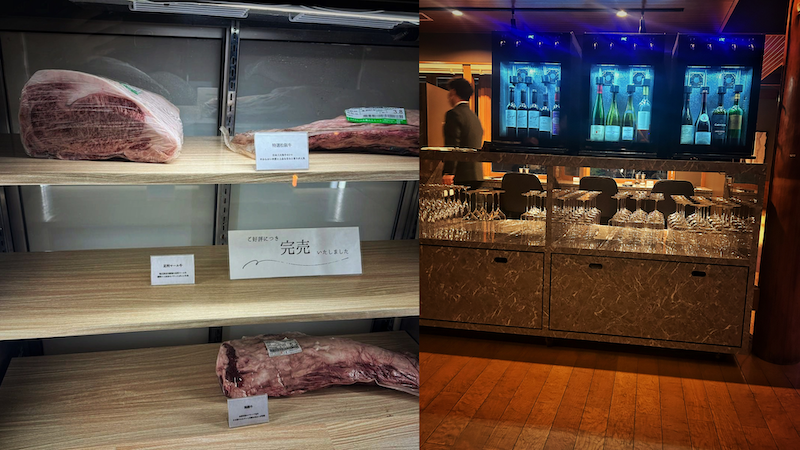
The draw is well-sourced Japanese beef cooked with restraint—good sear, warm center, and seasoning that lets the meat speak for itself. Sides support rather than distract, and the pacing keeps you comfortable from start to finish.
If you prefer structure, consider taking a course to experience the full arc. If you prefer control, choose your cut and size, then add a simple salad and a vegetable to make the steak the main attraction.
Wine works, but a small pour of sake or Japanese whisky pairs nicely with the natural sweetness of wagyu.
What we ordered & how it landed:
We went for the set menu and was a great decision. The steak came exactly as promised—proper crust, soft center—and the sides were thoughtful instead of fussy.
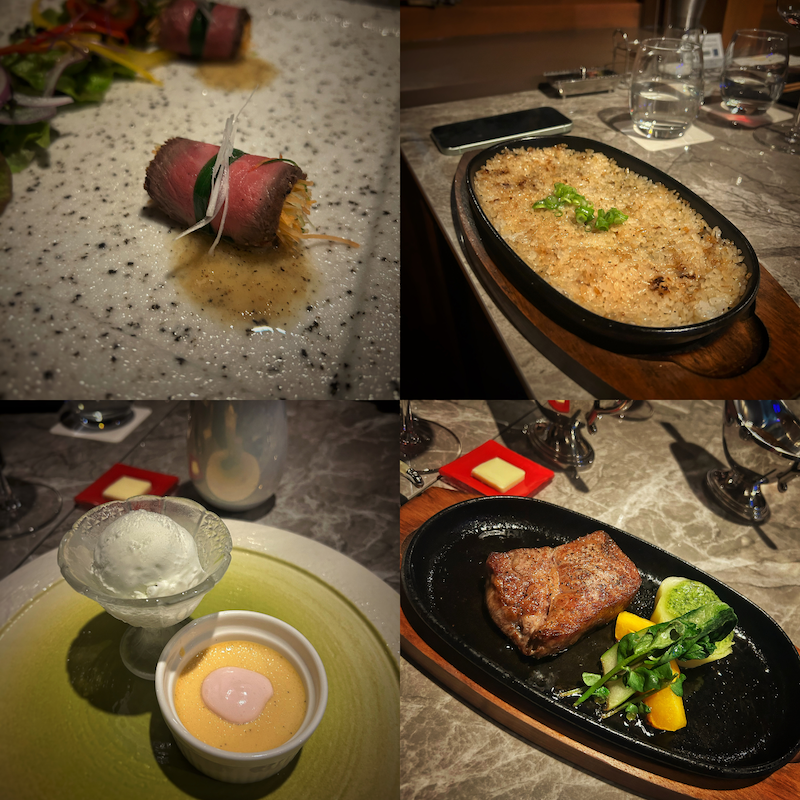
It was a rainy night, and when we finished, the staff offered to help us get back to the hotel, which tells you everything about the tone of the place.
Expensive for Kinugawa, yes; still less than a comparable night in Tokyo, also yes. So if you want a genuine wagyu experience at almost half the price than in a big city, I suggest you book a table.
Roughly what to expect: reservations recommended, calm dining room, measured portions (you'll leave satisfied, not stuffed), and the feel of a special dinner without big-city stress or pricing.
Etiquette and logistics (the small things that matter)
Before we get into the specifics, a quick promise: none of this is fussy. It's the small stuff that keeps your meals smooth, your trains easy, and your days open for great food. Think of it as a cheat sheet for blending in and eating well.
At the table
Don't eat while walking; finish near the shop or sit down—cleaner, calmer, and it won't raise eyebrows. Portion sizes are sensible, so order what you plan to finish. If you're unsure, start small and add. Keep your conversation at a room volume; most dining rooms are intentionally low-key.
On trains and in stations
Phones on silent. No voice calls in the carriage; step to the inter-car space if you must. Big stations (Shinjuku, Tokyo, Shibuya) are mini-cities—follow signs, allow extra time, and accept that one wrong turn is normal. Touch in/out with Suica or PASMO on your phone and skip ticket machines.
Money and payments
Carry some cash. Family shops and older venues can be cash-first even if the city is mostly tap-to-pay. Splitting bills isn't always a thing—one person pays, settle up later. No tipping; service is included.
Onsen basics (quick but important)
Shower and rinse before entering the bath. No swimsuits in public baths. Towels stay out of the water. Tattoos can be restricted—ask ahead, book a private bath, or cover if allowed. When in doubt, check the hotel's guide.
Language and ordering
A lot gets solved with pointing, a smile, and a simple "sumimasen." Learn a couple of key words (allergy, pork, beef, spicy) or keep them in your notes app.
Weather and plans
Rain and typhoon season can nudge schedules. Keep a Plan B nearby: a second restaurant within a 10-minute walk, or a café you're happy to wait in. In onsen towns, dinner hours can be short—eat earlier rather than gamble on late seating.
Trash, smoking, and little norms
Trash bins are rare; hold wrappers until you find one. Street smoking is limited to marked zones.
Escalators: stand to one side (it varies by region—follow the crowd). Punctuality matters—arrive when you said you would.
Convenience without shortcuts
Stores such as 7-Eleven, FamilyMart, and Lawson are great for drinks, onigiri, and quick bites; ekiben makes train days feel special.
But if you want meals you'll remember, sit down somewhere small and local, let the kitchen do its thing, and match the room's pace.
FAQ
Q: How do I get to Kinugawa Onsen from Tokyo?
A: Limited-express trains from Asakusa (and some through services from Shinjuku) run straight to Kinugawa-Onsen Station.
Q: Is eating out expensive here?
A: Casual meals are generally cheaper than in much of Western Europe. Small local venues offer excellent value.
Q: What local foods should I try?
A: Soba (buckwheat noodles), yuba (tofu skin), grilled hokke, homestyle teishoku, and izakaya small plates.
Q: Any café near the station?
A: Galerie Café Painto E—a practical stop for coffee and planning (laundry across the street is also very helpful).
Conclusion
Kinugawa Onsen is the exhale between big-city chapters: steam over the river, cedar in the air, food that tastes like someone cooked for you, not for a camera.
If Tokyo is a vertical scavenger hunt, Kinugawa is a horizontal stroll—rustic soba at noon, yuba and hokke in the afternoon, Sacchan's glow at dusk, and a quiet steakhouse to toast the rain.
Build a short list, reserve one or two dinners, and let the town slow you down.
**This article was written in January 2026. Please note that circumstances can change over time. If you discover that any venues mentioned have since closed, kindly inform us. Thank you!